

Pulling into your driveway should evoke immediate pride, not a list of regrets about dated finishes or faded paint. Your home's facade is the initial architectural handshake with the world—it sets the tone for your lifestyle, elevates property value, and shapes how you feel every time you return home.
Here is the truth: learning how to update a house front without remodeling does not require a heavy construction budget, municipal permits, or months of dust and noise.
Historically, reimagining an exterior elevation meant paying over $10,000 for architectural drafting fees or guessing how new materials would interact on an old building. Without specialized software experience, trying to coordinate paint swatches, timber cladding, and lighting accents often felt overwhelming.
Today, smart surface updates allow you to completely update your house exterior while keeping the underlying structure intact. By focusing on surface textures, high-contrast focal points, and visual balance, you can turn an ordinary frontage into an extraordinary architectural statement.
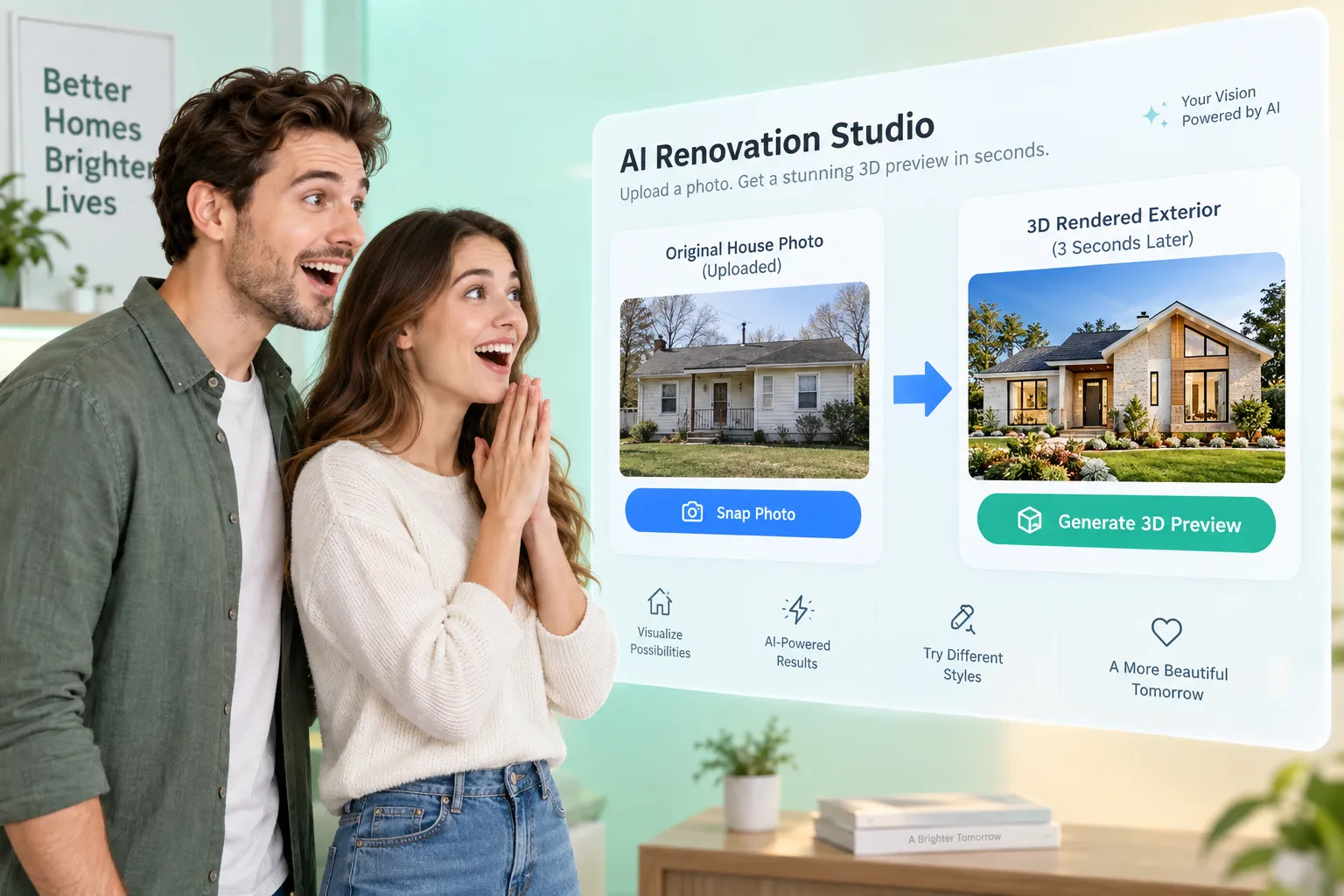
Start With the Features That Make the Biggest Difference
When an exterior feels dated, the instinct is often to tear down everything at once. However, applying Hick’s Law—reducing unnecessary options—prevents overwhelm and focuses your resources on high-yield architectural anchors.
Think about it this way: certain exterior features carry far more visual weight than others. Addressing these key anchors first yields maximum visual impact with minimal effort.
Focus your initial update budget on these four core zones:
- The Front Entrance: The primary focal point that directs eye movement and anchors the entire layout.
- Color Distribution: The overall base-to-trim ratio that establishes whether a house feels modern or aged.
- Exterior Lighting Fixtures: Nighttime illumination that creates depth, shadow lines, and architectural warmth.
- Walkways and Arrival Paths: The ground-plane journey that guides visitors from the curb to your doorstep.
Prioritizing these primary areas eliminates visual clutter without forcing you into an expensive structural overhaul. Before ordering materials, using a tool to calculate exterior renovation costs keeps your planning grounded and realistic.
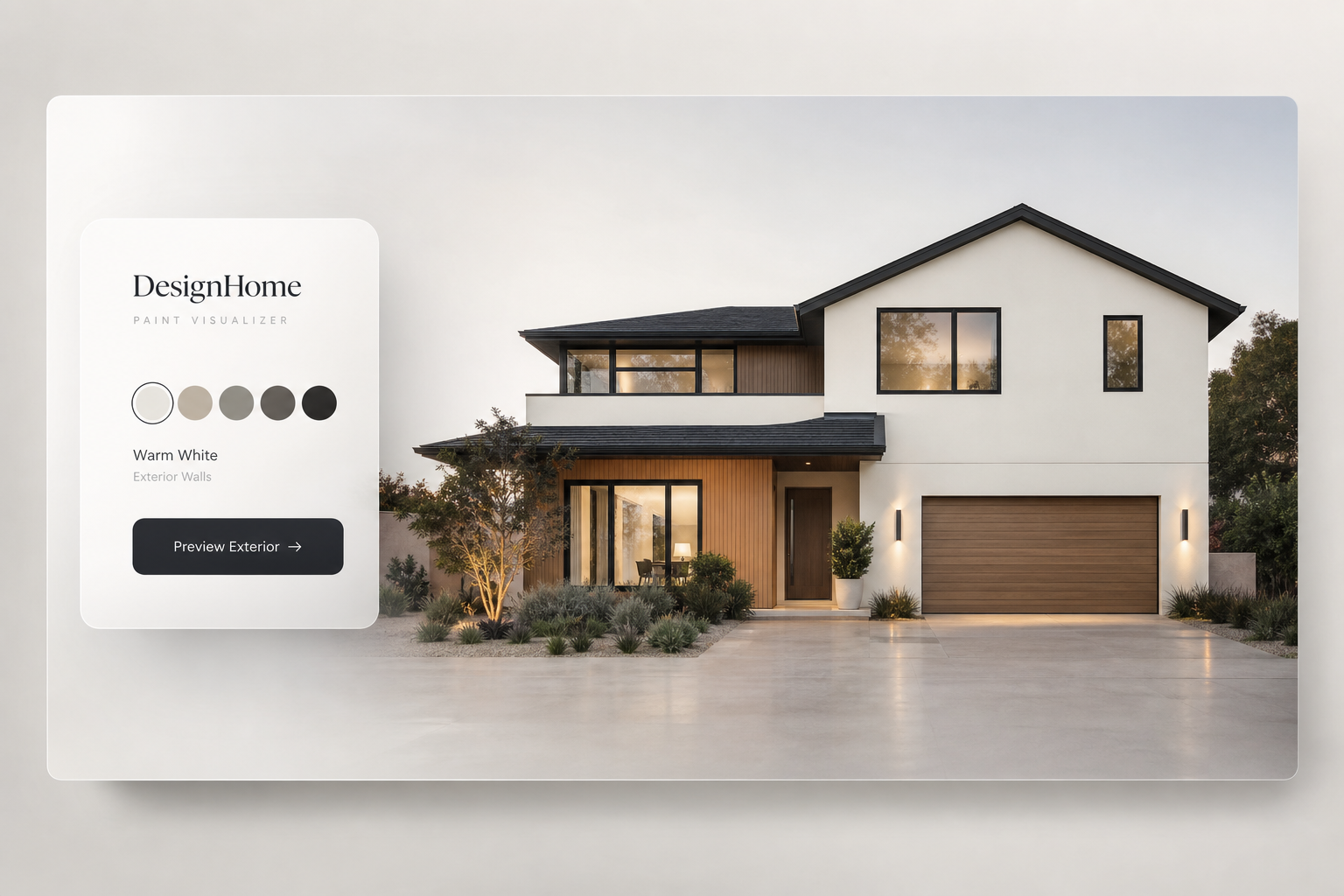
Give the Front Door a Fresh Look
The human eye naturally searches for an anchor point when viewing a home facade. According to Gestalt visual psychology, if the main entrance lacks contrast or presence, the entire building feels incomplete.
Here’s the secret: a front door makeover is the single fastest surface update you can make.
Ways to make your entrance stand out:
- High-Contrast Paint or Warm Stain: If your siding is a neutral greige or off-white, paint the entrance door in a deep matte charcoal, forest green, rich navy, or warm smoked oak.
- Upgrade Door Casing: Install wide 5-to-7-inch exterior trim around the door frame to give the entryway physical weight and prominence.
- Architectural Hardware: Swap out standard builder knobs for an elongated 36-inch vertical pull bar in brushed brass or matte black stainless steel.
Deciding to order custom front doors or re-staining an existing hardwood entrance brings immediate sophistication to an aging front porch.
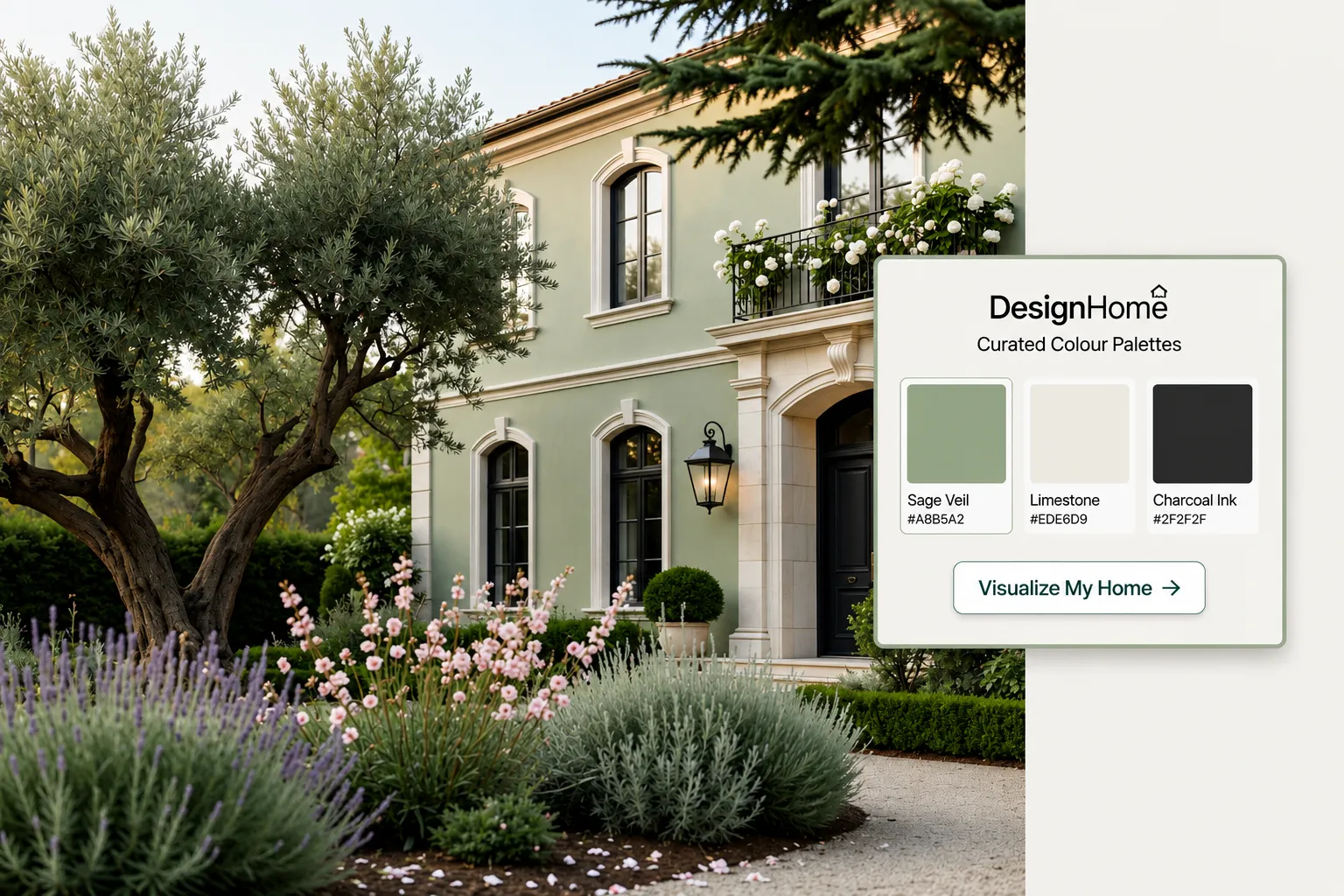
Refresh the Exterior Colors
Washed-out beige, yellowed cream, or faded brown paint schemes instantly betray a home's age. Modern exterior architecture relies on intentional color ratios and rich tactile contrast.
Look closer: achieving a high-end look comes down to color balance.
| The 60-30-10 Exterior Color Rule | Surface Coverage | Recommended Color Selections |
|---|---|---|
| Primary Base (60%) | Dominant body walls & main siding | Warm alabaster, mineral gray, deep charcoal, or smooth stucco render |
| Architectural Framing (30%) | Window trims, roof eaves, garage doors | Matte bronze, slate, dark charcoal, or crisp architectural white |
| Focal Accent (10%) | Front door, shutters, timber portico | Natural cedar stain, rich terracotta, or brushed metallic accents |
Painting dark window frames against a light neutral base creates crisp geometric lines that look intentional and modern. Choosing to buy exterior paint online gives you access to modern low-sheen, weather-resistant acrylic coatings that resist fading under direct UV rays.
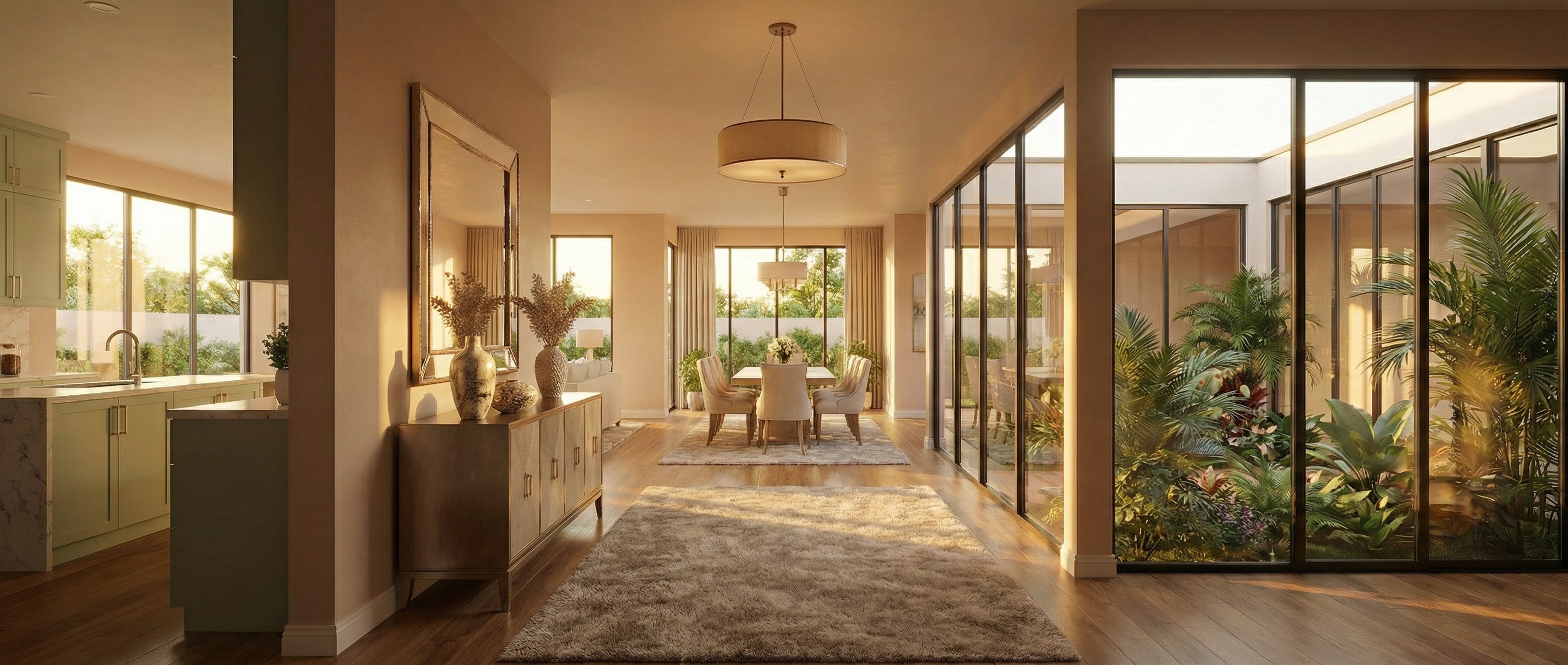
Upgrade Exterior Lighting
Nothing flatters an exterior elevation like layered architectural lighting. An outdated, single porch light creates harsh glare, deep shadows, and leaves the building looking flat after dark.
And it gets better: updating lighting requires no structural demolition—just replacing old fixtures on existing wiring.
Essential lighting layers for modern curb appeal:
- Entry Sconces: Mount oversized, downward-facing wall sconces on both sides of the front door, sized at roughly 1/4 the total height of the door frame.
- Soffit Downlighting: Install flush LED puck lights under roof eaves to wash warm light down textured siding or masonry.
- Up-Lighting on Key Features: Conceal small LED spotlights in garden beds to highlight stone pillars, gables, or specimen foliage.
Selecting to buy outdoor LED sconces rated at a warm 2700K color temperature creates a welcoming atmosphere that highlights your home's best features every night.
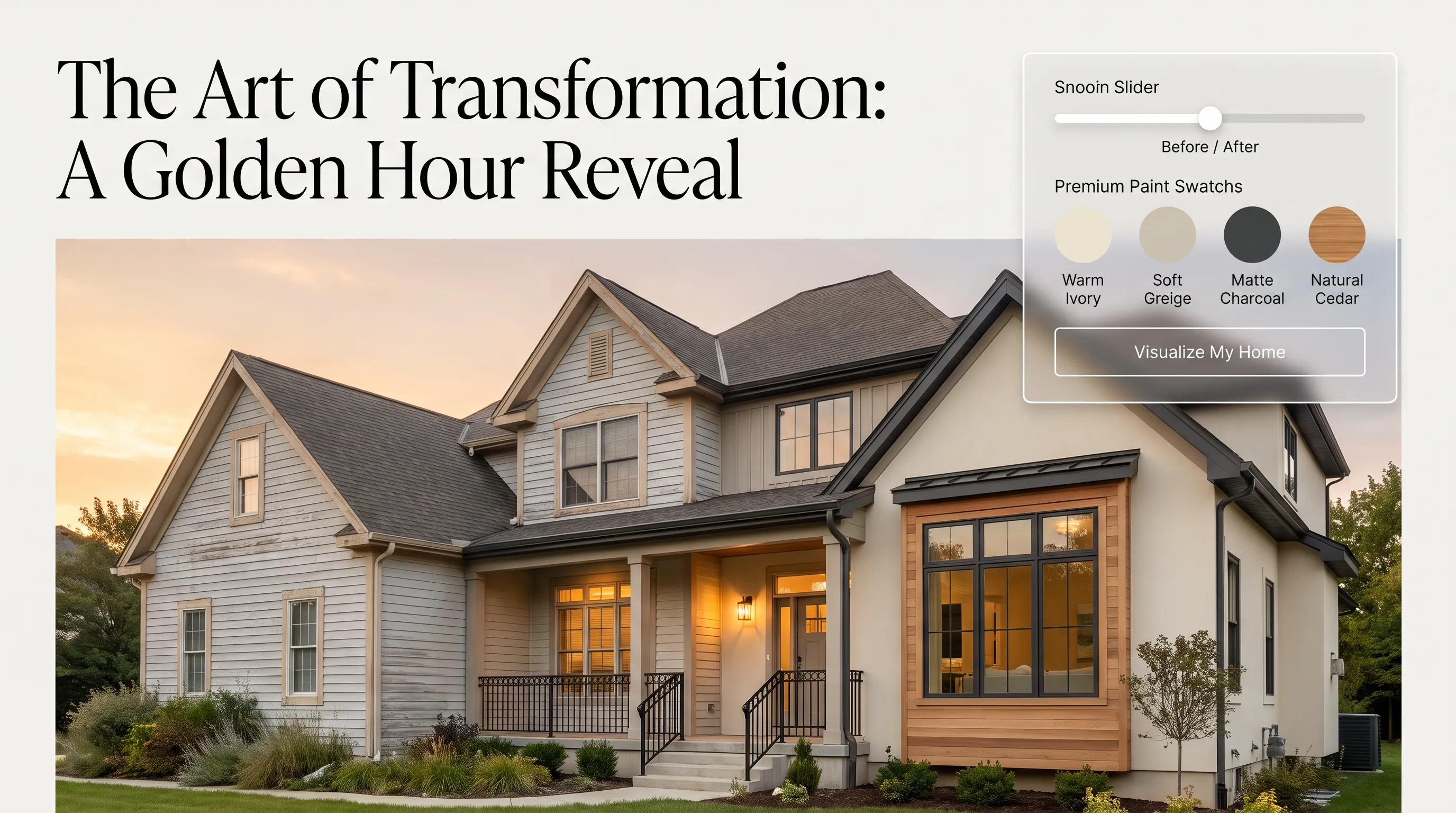
Make Windows Look More Updated
Windows are the "eyes" of your home's facade. Thin, flat window frames set flush against siding make a building look basic and industrial.
Ways to refresh windows without full replacements:
- Paint Trims in Dark Contrast: Painting window casings in matte black or dark bronze mimics modern black-aluminum windows at a fraction of the cost.
- Add Thicker Exterior Casing: Install wide trim boards around bare windows to create shadow depth and structural framing.
- Mount Proportional Shutters: If adding louvers or board-and-batten shutters, ensure each shutter matches exactly half the width of the window glass so they appear functionally real.
Upgrading your glass surrounds with modern window trim systems converts flat windows into custom architectural features.
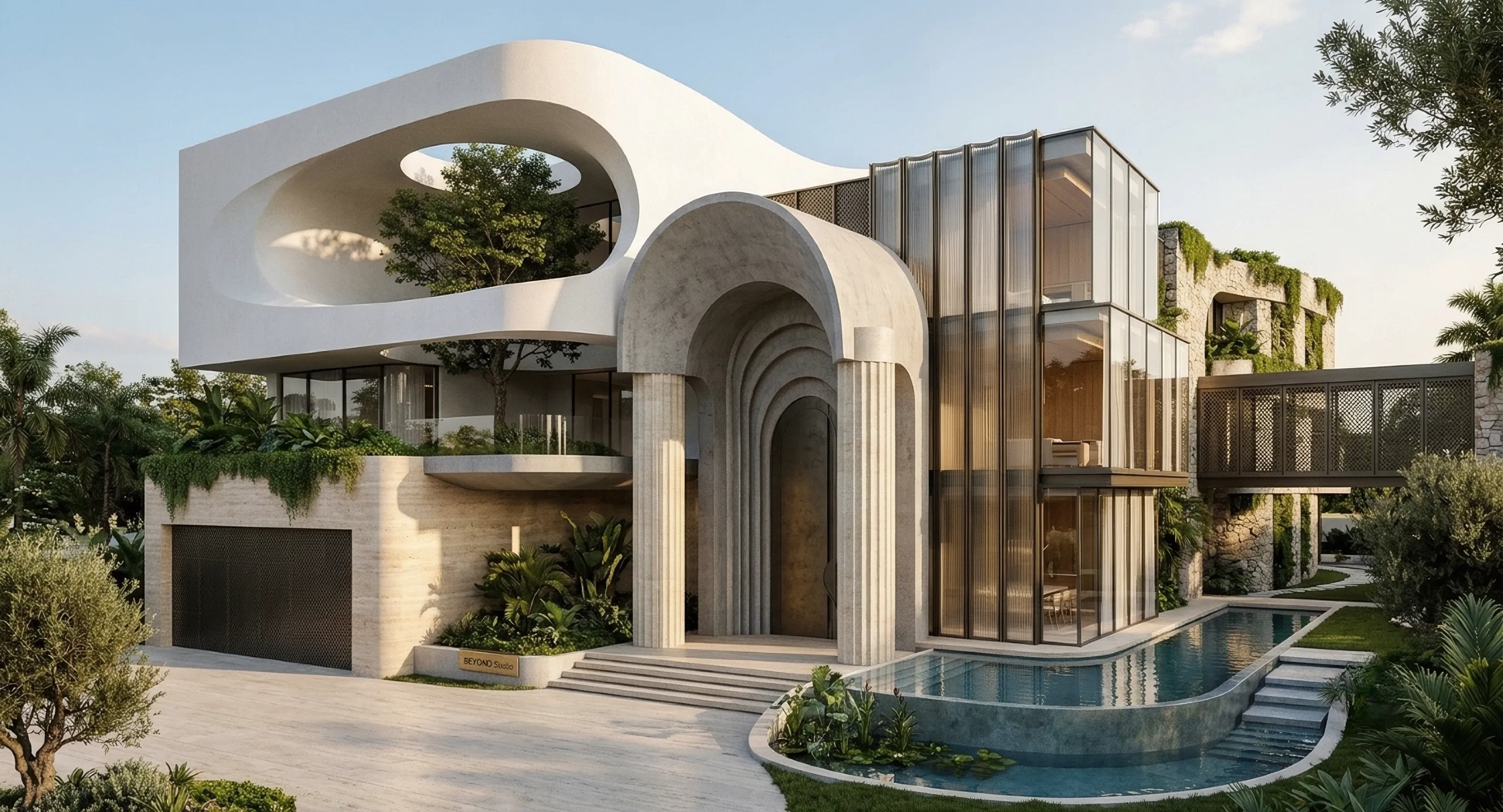
Improve the Driveway and Entry Path
The journey from the street to your front door establishes the guest experience before anyone steps inside. A cracked, narrow concrete walkway makes even a well-maintained house feel neglected.
Upgrading the approach layout:
- Widen Walkway Dimensions: Expand narrow 30-inch concrete pathways to a generous 48-to-60-inch walkway, allowing two people to walk comfortably side-by-side.
- Frame Driveway Edges: Add a double soldier-course border of dark granite or concrete pavers along an existing driveway to create a clean, finished boundary.
- Stain or Seal Concrete: Apply a breathable, semi-transparent concrete stain in slate or warm charcoal to hide stains and uniform raw concrete surfaces.
Partnering with professionals to hire hardscape paver contractors ensures your arrival path is level, well-drained, and visually inviting.
Add Landscaping Around the Front
Unsoftened masonry and sharp building corners can leave a front elevation looking cold and disconnected from its surroundings. Thoughtful foundation landscaping grounds the building naturally into its environment.
Principles for effective landscape framing:
- Layered Elevation Heights: Plant tall evergreen shrubs at outer building corners to frame the structure, stepping down to mid-height bushes and low ground cover near paths.
- Conceal Concrete Foundations: Plant low, dense hedges (such as boxwood or dwarf Yew) along the base of the house to mask exposed concrete footings.
- Contrast Foliage Textures: Pair broad-leaf hostas with feathery ornamental grasses and weeping accent trees (like Japanese Maples) for year-round visual movement.
Choosing a front yard makeover plan that blends evergreen structure with seasonal flowering plants keeps your facade looking vibrant through all four seasons.
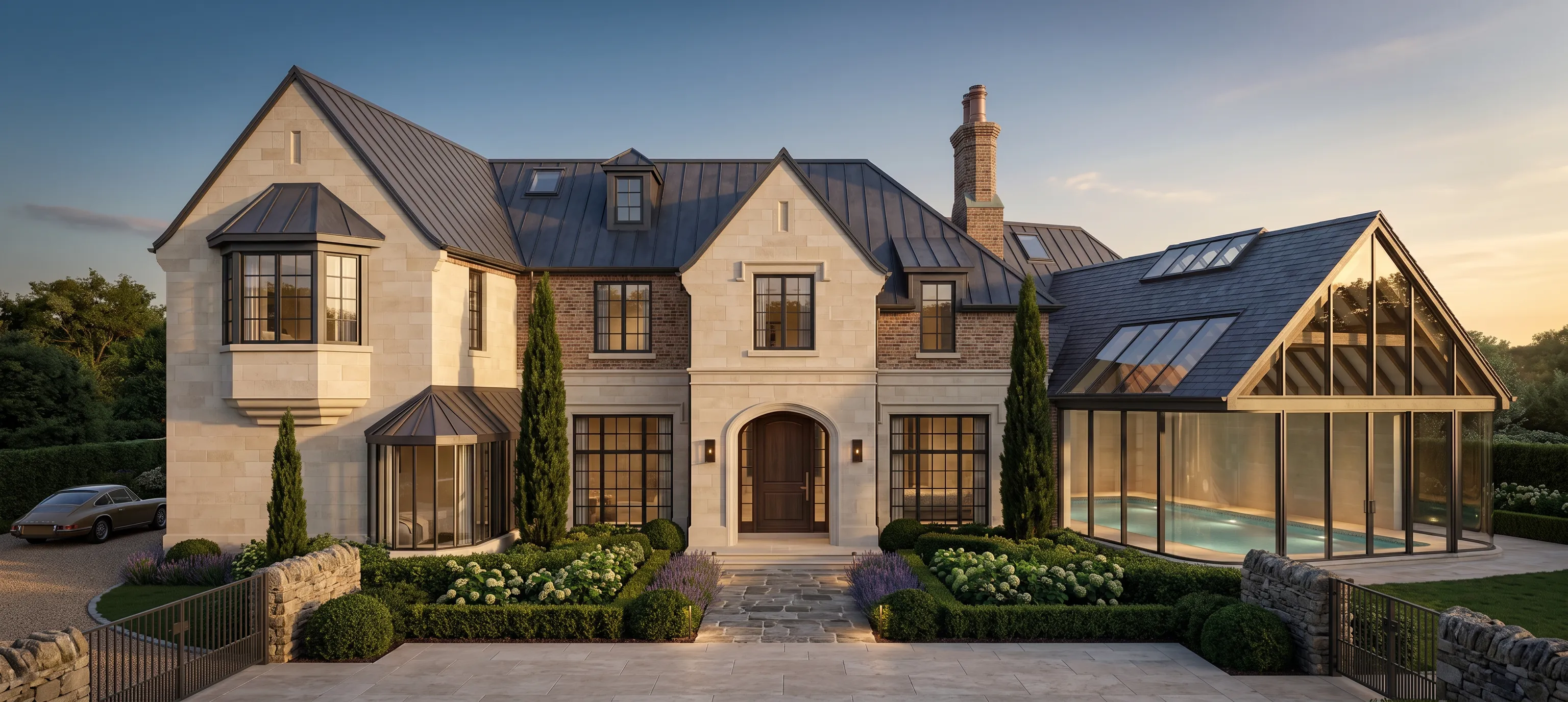
Refresh Small Exterior Details
The Zeigarnik Effect in visual design demonstrates that incomplete or mismatched minor details draw disproportionate negative attention. Old bronze house numbers, a rusted mailbox, and a tattered door chime ruin the effect of fresh paint.
Small hardware upgrades with big impact:
- Modern House Numbers: Install large 6-to-8-inch floating metal house digits mounted vertically on wood cladding or stone.
- Coordinated Hardware Finishes: Match your door handle, porch light fixtures, house numbers, and mailbox with a unified finish (such as matte black or brushed bronze).
- Conceal Utility Equipment: Build a slatted wooden screen or plant evergreen hedges around visible air conditioning units, gas meters, and hose reels.
Taking time to order custom house numbers adds an immediate custom finish to your entry zone.
Make the Front Look More Modern Without Construction
Creating a cohesive, modern aesthetic requires unifying individual surface updates under a single design language.
The slippery-slope design approach: when you combine fresh paint, high-contrast trims, warm wood accents, and clean lighting, the cumulative effect creates the look of a full architectural rebuild.
| Modern Exterior Style Configurations | Primary Wall Surface | Accent Materials | Lighting & Hardware |
|---|---|---|---|
| Modern Transitional | Off-white / Alabaster paint | Warm oak front door & dark bronze trim | Gooseneck sconces & black hardware |
| Contemporary Minimalist | Deep charcoal / Mineral gray | Vertical cedar batten accents & black window frames | Flush soffit downlights & hidden handles |
| Warm Organic | Soft greige / Textured render | Natural stone veneer base & timber porch columns | Warm 2700K up-lighting & brass accents |
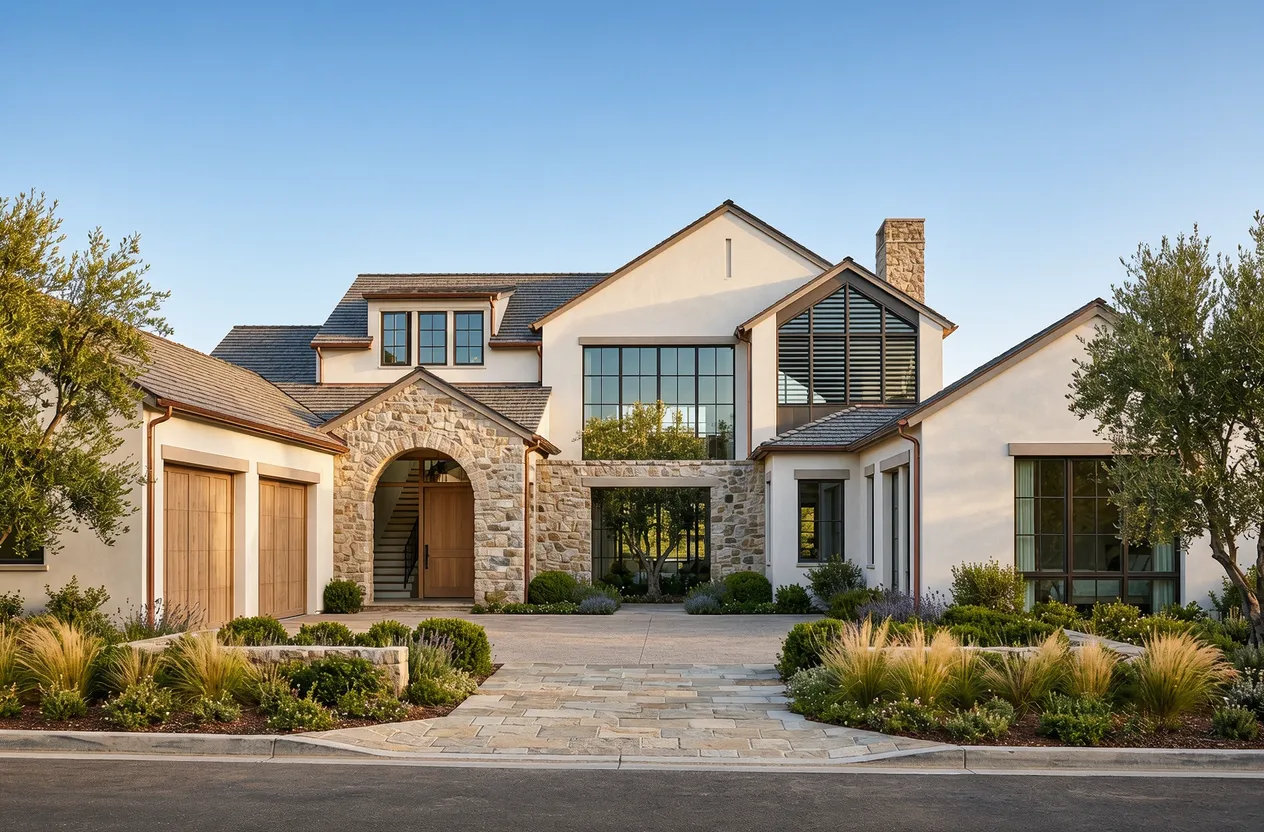
Combining smooth masonry with warm vertical wood cladding gives your home continuous visual interest as light shifts throughout the day.
Compare Different Front-Exterior Looks Before Making Changes
Committing to paint colors, stone veneers, or custom door styles without testing how they interact on your physical home leads to expensive mistakes. Comparing layout options side-by-side protects your investment and ensures total confidence.
Here is where technology changes everything: you no longer need complex CAD drafting skills or $10,000 architectural retainers to visualize your home's transformation.
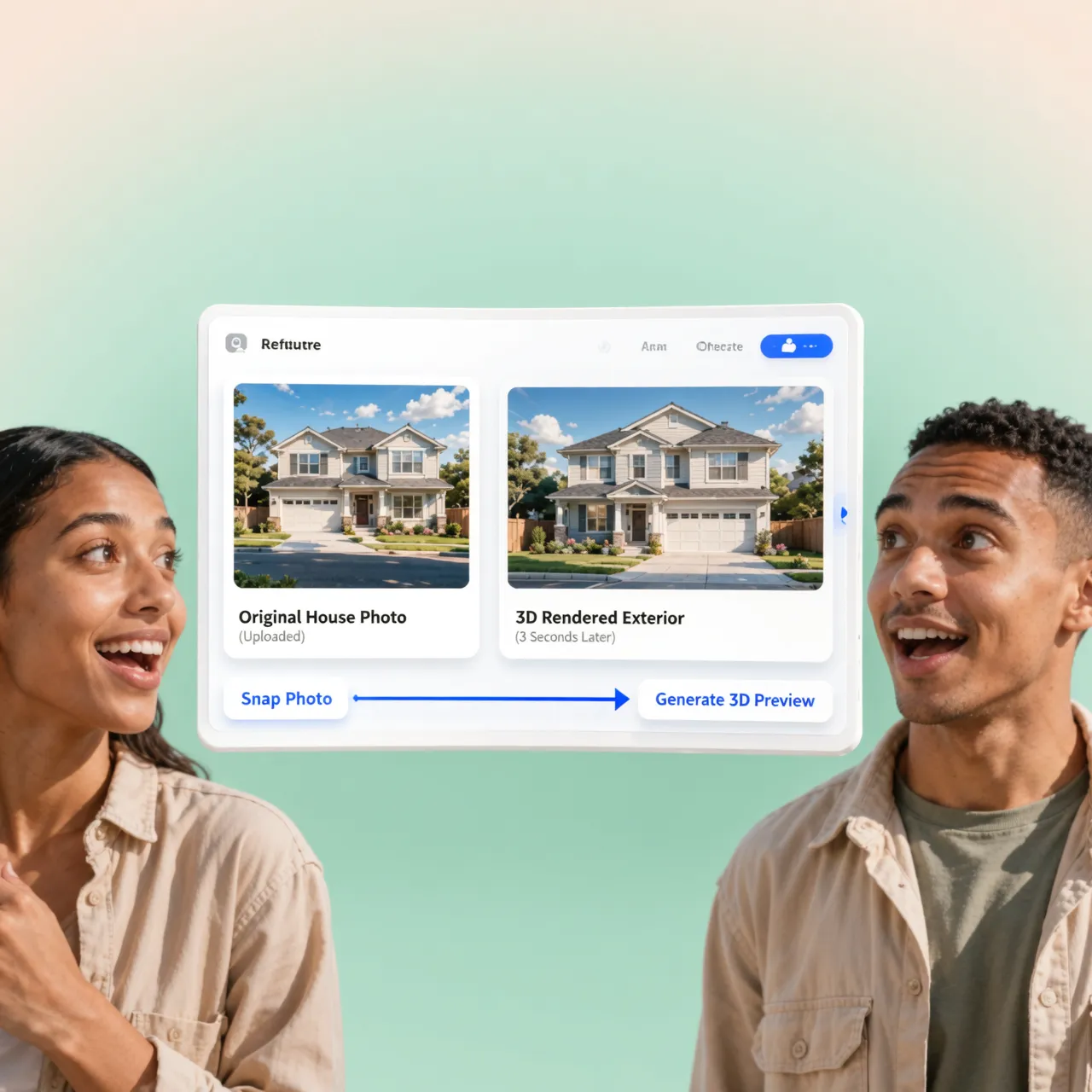
With DesignHome Synthesis™, bringing your exterior vision to life is fast and effortless. Simply upload a photo of your current house front or floor plan into our layout intelligence system. The software maps your building geometry, allowing you to test paint palettes, swap front door styles, preview window trims, and evaluate lighting layouts in realistic 3D renderings before buying a single gallon of paint.
Using an intuitive house exterior visualizer takes the guesswork out of remodeling, giving you complete peace of mind.
Create a Fresh House Front Without a Full Remodel
Achieving a striking, high-value house front comes down to strategic planning, proper material pairing, and clean visual execution.
Your step-by-step exterior refresh checklist:
- Conduct a Street Audit: Stand across the street and photograph your facade to identify visual bottlenecks, dated colors, and hidden entrances.
- Select Your Palette Ratio: Choose a primary 60% body color, a 30% trim framing tone, and a 10% entrance accent color.
- Elevate the Entrance: Refresh your front door with bold paint or natural stain, wide casing trims, and modern pull hardware.
- Upgrade Exterior Lighting: Install 2700K entry sconces, soffit downlights, and low-voltage path lighting.
- Frame Walkways & Greenery: Widen arrival paths with stone pavers and add layered foundation plantings.
- Preview Before Buying: Use a 3D house front makeover tool to test colors, cladding options, and layouts before starting work.
Taking a structured, step-by-step approach turns exterior updates into an enjoyable project, giving you a beautiful home front that brings daily joy and long-term value.
Frequently Asked Questions: Update a House Front Without Remodeling
Can I genuinely transform my home's curb appeal without major construction or permits?
Here’s the truth: you do not need heavy demolition, municipal permits, or a massive budget to create a stunning facade. Most outdated home fronts suffer from flat surface depth, washed-out paint schemes, and weak focal points—not structural flaws. By strategically refreshing surface finishes, widening window casings, upgrading light fixtures, and painting key architectural anchors, you change how light and shadow interact with your building. These non-structural updates give your house a custom, high-value look in a fraction of the time.
Which single feature should I update first for maximum visual impact?
Think about it this way: your front entrance carries more visual weight than any other element on your building elevation. Applying Hick’s Law—reducing visual clutter to guide focus—means directing your budget where the human eye naturally lands first. Upgrading your front door with bold paint or warm timber stain, adding wide casing trim, and mounting modern hardware delivers the highest immediate transformation without forcing you into an expensive whole-house renovation.
How can a front door makeover dramatically change the look of my entrance?
Here’s the secret: according to Gestalt visual psychology, the brain searches for a strong visual anchor when viewing a building. If your entryway lacks contrast, the entire front feels uninviting and incomplete. Painting your door in a high-contrast shade—like deep charcoal, forest green, or rich navy—or re-staining it in warm oak immediately establishes an focal point. Adding wider 5-to-7-inch exterior casing and an elongated vertical pull bar gives your front door physical weight and instant presence.
What exterior paint color ratio prevents a house front from looking flat or dated?
Look closer: luxury facades rely on intentional color distribution rather than a single flat tone across all walls. Follow the classic 60-30-10 architectural color rule:
- 60% Primary Body: A clean, low-sheen base tone (such as warm alabaster, greige, or mineral gray) for main walls or siding.
- 30% Secondary Framing: A strong contrast shade (like dark bronze, slate, or matte black) applied to window trims, roof eaves, and garage door frames.
- 10% Focal Accent: A warm color accent or natural timber finish reserved strictly for the front door and entryway portico.
This calculated contrast establishes crisp geometric lines that make the entire building look structured and modern.
How do I upgrade my exterior lighting to improve nighttime curb appeal?
And it gets better: fixing nighttime curb appeal requires no structural rewiring—just swapping existing fixtures for layered LED lighting. Dated single porch bulbs create harsh downward glare and leave surrounding walls in deep shadow. Replace old lanterns with oversized wall sconces scaled to roughly 1/4 the height of your door frame, install flush soffit downlights under roof eaves, and tuck low-voltage spotlights into garden beds. Keeping all bulbs at a warm 2700K to 3000K color temperature creates an inviting, resort-like evening glow.
How can I make plain vinyl or aluminum windows look modern without replacing the glass?
Pay attention to this detail: windows frame the face of your house, and flat, thin trims instantly broadcast a budget build. You can give basic windows an expensive, set-deep appearance using three simple surface techniques:
- Paint Trims in Dark Contrast: Painting window casings in dark bronze or matte black mimics modern black aluminum factory windows.
- Add Substantial Casing: Surround window frames with 4-to-6-inch wide composite trim boards to cast defined shadow lines against siding.
- Upgrade Sill Depth: Install projecting bottom sills beneath glass openings to add visual depth and physical structure.
What is the easiest way to refresh a narrow or cracked concrete walkway?
Here is how to fix it: a narrow 30-inch concrete path forces guests to walk single-file, making your arrival experience feel cramped. Instead of jackhammering old concrete, expand the path visually by laying a double border of dark granite pavers along both edges. You can also apply a semi-transparent, breathable concrete stain in warm slate or charcoal to hide old discoloration, creating a generous 48-to-60-inch walkway where two people can comfortably walk side-by-side.
How can landscaping anchor a house front without hiding the architecture?
Picture this: landscaping should act as a tailored frame for your home, not a wall that blocks it. Plant structured evergreens (like columnar hornbeams or tailored boxwoods) at outer building corners to anchor the footprint into the site. Step down to mid-sized flowering shrubs, and finish with low ground cover alongside entry paths. Combining broad-leaf plants with feathery ornamental grasses introduces organic movement that balances rigid masonry year-round.
What minor hardware details secretly ruin an otherwise fresh facade?
The devil is in the details: in visual design, the Zeigarnik Effect reveals that incomplete, mismatched, or rusted minor items draw a disproportionate amount of negative attention. Small builder-grade house numbers, a rusted mailbox, an exposed garden hose, and a tarnished doorbell chime ruin the impact of fresh paint. Replace tiny address numbers with large 6-to-8-inch floating metal digits mounted vertically, and unify all hardware under a single finish, such as matte black or brushed bronze.
How do I make an old traditional house front look modern without rebuilding?
Look at the bigger picture: modernizing a traditional front comes down to unifying individual surface updates under a clean, cohesive design language. Combining fresh off-white body paint, dark bronze window trims, vertical cedar batten accents on a porch ceiling, and crisp LED lighting creates a cumulative transformation. This surface-level alignment mimics the look of a full architectural redesign without modifying a single load-bearing wall.
How can I test colors, door styles, and cladding options before buying materials?
Testing before buying changes everything: committing thousands of dollars to paint, stone veneer, or custom doors without seeing how they interact on your physical home is a risky gamble. Instead of guessing with small swatches, you can use DesignHome Synthesis™ to test custom exterior layouts. By uploading a photo of your house front or floor plan into our layout intelligence system, you can swap paint schemes, preview timber porticos, test window trims, and evaluate night lighting side-by-side with total confidence before starting work.
What step-by-step roadmap should I follow to refresh my house front without getting overwhelmed?
Take it step-by-step to maintain complete control over your budget and timing:
- Phase 1 (Entrance Anchor): Paint or re-stain the front door, install wide door casing trim, update house numbers, and mount 2700K entry sconces.
- Phase 2 (Architectural Framing): Paint window frames and roof eaves in a strong contrast shade, add thick window casings, and stain or border entry walkways.
- Phase 3 (Greenery & Details): Plant layered foundation foliage, install low-voltage garden lighting, and add slatted timber screens to hide utility meters and AC units.
Executing your exterior refresh in structured phases ensures every update delivers maximum visual value while turning your facade into a beautiful, welcoming home front.


