

Renovate or Move: How to Decide
Let's be honest: standing at the crossroads between tearing down walls in your current home or putting a "For Sale" sign in the yard is one of the most paralyzing financial and emotional decisions you will ever make.
Every homeowner reaches a tipping point where their house simply stops working for their daily life. The kitchen feels cramped, storage is non-existent, or your lifestyle has outgrown the footprint. Suddenly, you are caught in an agonizing loop: Should I spend $150,000 to transform this property, or put that cash toward a down payment on a new home?
Deciding whether to renovate or move is not just about comparing construction quotes against mortgage rates. It is an evaluation of emotional attachment, localized property equity, structural feasibility, and long-term financial exposure. If you make the wrong split-second choice, you risk either over-capitalizing on a house that will never truly fulfill your needs or burning tens of thousands of dollars in transaction fees to buy a new house with its own hidden flaws.
Before you hire a contractor or call a real estate agent, you need a cold, objective framework to decide whether to renovate or move house. Here is how to evaluate your options systematically.

Why Are You Considering a Change?
Here's the reality: most homeowners start browsing real estate listings for the wrong reasons. They mistake temporary visual fatigue or easily solvable spatial friction for a permanent property failure.
To make the right home renovation decision, you must first isolate the core problem driving your discontent. Ask yourself: Is your home suffering from a surface flaw, a functional flaw, or a location flaw?
Think about it: if your frustration stems from location or lot constraints, no amount of custom marble or open-concept framing will solve the problem. Conversely, if you love your street, your neighbors, and your school zone, trading away a sub-3% mortgage rate just to get a modern kitchen layout in a different neighborhood is a financial trap.
When Renovating Your Current Home Makes Sense
There is a distinct moment when staying put and executing a strategic remodel yields an incredible lifestyle upgrade while protecting your wealth. Deciding when to renovate instead of move comes down to recognizing the irreplaceable value you already own.
Here's why staying put is often the smartest strategic play:
- You Own an Unbeatable Interest Rate: If you secured a historical 2.5% to 3.5% mortgage rate, abandoning it to finance a new property at current market rates will dramatically reduce your purchasing power. Renovating allows you to preserve your low primary mortgage while utilizing a targeted HELOC or cash reserve for improvements.
- You Have Built Significant Equity: Staying in place lets you deploy your equity directly into high-ROI upgrades—like kitchen expansions or primary suite additions—increasing your home's equity buffer.
- Your Lot Has Unlocked Expansion Potential: If your property sits on a generous lot with favorable local zoning setback laws, you have room to expand outward or construct an accessory dwelling unit (ADU).
- Your Neighborhood Has a High Ceiling: If homes on your street are selling for significantly more than your property's current value, you can invest heavily in a remodel without fear of over-improving for the area.
When you renovate your existing home, every dollar spent goes directly into building tangible equity in a location you already trust. But what happens when the house itself reaches an absolute physical ceiling?
When Moving May Better Fit Your Needs
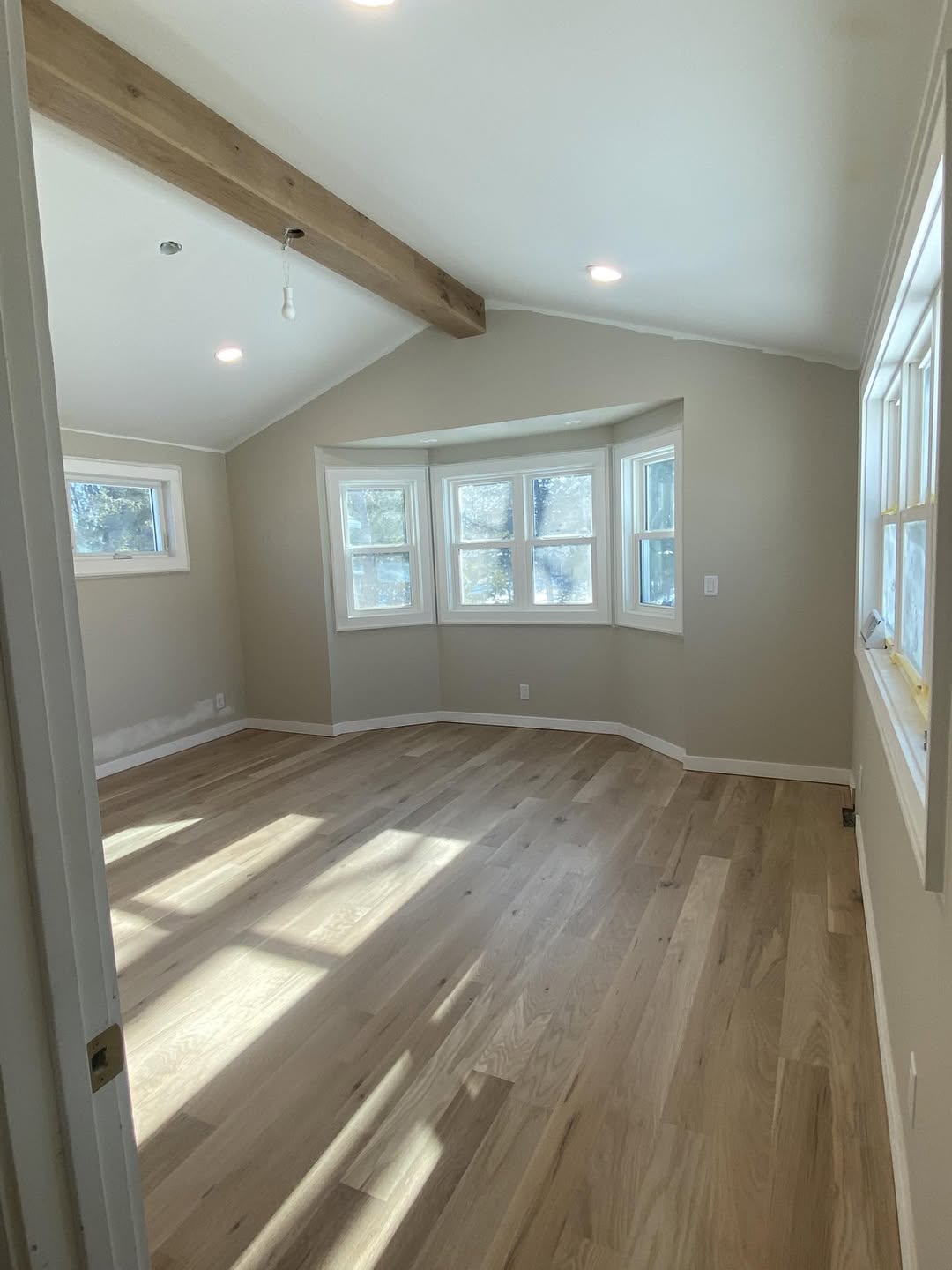
Look closer: there are physical, structural, and legal boundaries that even the most talented architect cannot overcome. Recognizing when to move instead of renovate prevents you from sinking hundreds of thousands of dollars into a property that will never perform the way you need it to.
It is time to look at new homes when you run into these hard limits:
- Lot Size & Setback Restrictions: If your home occupies the maximum allowable footprint on a small lot, local setback ordinances will prohibit ground-floor additions.
- Neighborhood Price Ceilings: If your home is already priced near the top of your immediate neighborhood market, investing $200,000 in additions will yield a terrible return on investment. You will never recoup that capital at resale.
- Fatal Layout or Structural Limitations: Trying to convert a low-ceiling, load-bearing-heavy structure into a airy, open-concept home often costs double what it would take to buy that footprint ready-made.
- Environmental & Community Friction: You cannot renovate a bad school district, a dangerous intersection, a 90-minute commute, or difficult next-door neighbors.
If your primary pain points are tied to the dirt beneath your foundation rather than the drywall above it, moving to a new house is your only logical exit strategy.
Compare the Cost of Renovating vs Moving
To prevent choice overload—a classic application of Hick’s Law—you must organize the financial variables into two clear, distinct buckets. Homeowners frequently fall into the trap of comparing a raw contractor estimate directly against the purchase price of a new house. This is a massive financial miscalculation.
To run an accurate renovate or move cost comparison, you must look at the complete financial ecosystem of both paths.
And it gets better: when you model this using a financial renovate or move calculator mindset, you quickly discover that moving carries enormous sunk transaction costs that generate zero equity return.
Selling a $700,000 home and buying an $850,000 home can easily burn $60,000 to $80,000 purely in agent commissions, transfer taxes, closing costs, and moving vans before you even unpack a single box. That is $80,000 of capital completely erased—money that could have funded a complete kitchen and primary suite transformation.
Look Beyond the Renovation Price Tag
Here’s why so many homeowners panic halfway through a project: they calculate the cost of construction materials, but turn a blind eye to the indirect "phantom costs" attached to both options.
Hidden Renovation Expenses (The Cost of Staying)
- Living Through the Construction Zone: Living without a kitchen for 4 to 6 months causes severe lifestyle disruption. If you choose to move out during heavy demolition, framing, and drywall phase, you must factor in 6 months of local rental payments.
- Scope Creep & Unseen Structural Defects: The moment contractor crews open up 40-year-old walls, they may find outdated knob-and-tube wiring, subfloor water damage, or non-code-compliant plumbing. You must maintain a strict 20% cash contingency fund.
- Carrying Costs: Financing a major build via a construction loan means paying interest on draws before the space is even livable.
Hidden Moving Expenses (The Cost of Relocating)
- The Buyer's Adjustment Budget: Almost no one moves into a resale home without making immediate changes. New window treatments, fresh interior paint, carpet replacement, and adjusting landscaping routinely swallow $20,000 to $40,000 within the first 90 days.
- Property Tax Shock: Depending on your state and municipality, moving from a property you have owned for a decade into a newly assessed home can cause your annual property tax obligation to double overnight.
- Utility & HOA Rate Escapement: Larger square footage in a new development often comes with higher monthly heating/cooling costs and mandatory HOA assessment fees.
Understanding these hidden leaks prevents you from suffering buyer's remorse regardless of which path you choose. You can avoid home renovation regret by mapping out every potential cost.
Can Your Current Home Be Changed Enough?
Pay attention to this: before you declare that your house is "too small" or "outdated," you must test its physical design limits. Most homeowners lack spatial visualization skills; they see solid drywall partitions and assume the existing layout is immutable.
In reality, simple architectural interventions can completely transform how a home functions without changing its exterior footprint:
- Removing Non-Load-Bearing Walls: Opening up the sightlines between the kitchen, dining, and living zones instantly creates the perception of a home 30% larger.
- Reclaiming Dead Volume: Converting an underutilized attached garage, formal dining room, or attic cavity into a functional workspace, pantry, or guest bedroom solves spatial friction at a lower cost per square foot than new ground-up construction.
- Re-orienting the Visual Focus: Replacing small, dated rear windows with floor-to-ceiling glass doors connects your interior living area directly to your backyard, expanding your living zone outward.
If your home has good structural bones, a solid foundation, and generous ceiling heights, its home renovation potential is likely far higher than you currently realize.
Consider Location Before You Decide
Here's the kicker: you can change your floors, raise your roofline, expand your kitchen, and re-clad your exterior facade. But you cannot move your property one inch to the left or right.
Location is the ultimate non-negotiable variable in real estate. When evaluating renovate vs relocate, conduct an honest audit of your property's immediate surroundings:
Ask yourself these four decisive location questions:
- How long is my daily commute, and will moving extend it?
- Are my children anchored in top-tier local schools that I want to retain?
- Is my street quiet and safe, or am I constantly battling traffic noise and parking issues?
- Is my broader neighborhood appreciating in value and attracting reinvestment?
If you answer "yes" to the positive location indicators, hold onto that property with everything you've got. Finding an equivalent lot in a prime location within your price range in today's market is exceptionally difficult. Renovating your existing structure protects your place in a desirable community.
Compare Your Current Home With What You Could Buy
Look at the numbers objectively: to make a rational choice, you need to execute a head-to-head comparison between your current home's post-renovation state and the realistic inventory available on the open market.
Don't compare your current home in its un-renovated state against a pristine, staged listing online. That is an unfair visual bias. Instead, map out a realistic direct comparison:
Think about it: when you buy someone else’s renovated house, you are paying a massive premium for their taste, their material selections, and their layout decisions—plus covering the seller's profit margin.
When you execute a targeted remodel on your existing property, every design decision is customized around your daily routine, family size, and aesthetic preferences.
Think About Your Next 5–10 Years
Fast-forward five years: where will your household be? A home decision made purely for your immediate present will often fail you down the road.
To future-proof your decision when considering whether you should I renovate or move, project your life across a 5-to-10-year horizon:
- Family Expansion or Aging Children: Are you planning for more children, or will your teenager be leaving for college in three years? Renovating to add bedrooms makes sense for a growing family, but if an empty nest is on the horizon, expanding your square footage right before your household shrinks is a costly mistake.
- Remote Work Dynamics: Is remote work a permanent part of your life? Converting a formal dining room or building an exterior garden office into a dedicated workspace can solve remote-work friction without requiring a full house hunt.
- Aging-in-Place & Universal Design: If this is your forever home, does the layout support long-term accessibility? A multi-story home with all bedrooms upstairs might become a liability in later years unless you can reconfigure a primary suite onto the ground floor.
Aligning your property choice with your long-term life trajectory prevents you from outgrowing your decision just a few years down the line.

Visualize What Your Current House Could Become
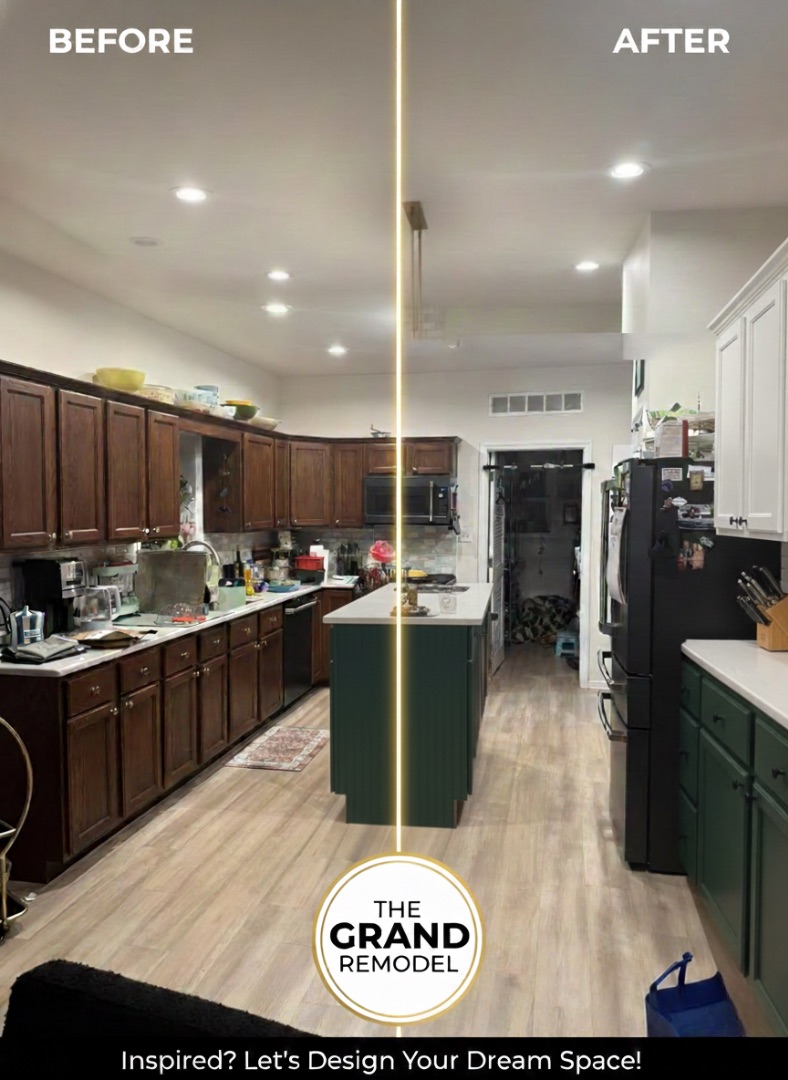
Picture this: the primary reason most homeowners abandon their current house prematurely is that they simply cannot see past their existing floor plan. They look at a dark corridor, an awkward kitchen, or a cramped exterior facade and assume that is all the house will ever be.
Before you make an irreversible commitment to move, you need to unlock the hidden spatial possibilities of your current home.
This is where advanced architectural design technology changes the game. Using DesignHome Synthesis™, you can upload your existing home layout or exterior elevation into our layout intelligence system to explore customized 3D spatial concepts in minutes.
Instead of paying tens of thousands of dollars in architectural retainers just to explore ideas, you can visually test structural wall removals, evaluate open-concept kitchen reconfigurations, preview exterior siding and window casings, and explore room expansions side-by-side. Seeing high-resolution spatial potential transforms a vague, stressful renovation idea into a clear, actionable roadmap.
Once you can visually compare what your current house could become against what the real estate market is offering, the correct choice becomes glaringly obvious.

Renovate or Move? Build Your Decision From the Facts
Here is your exact verdict framework. Use this weighted decision checklist to bring all your research together and make a definitive, confident choice based on your actual situation:
If you checked 4 or more "KEEP" boxes: Your current property holds immense untapped value. Moving will cost you unnecessary transaction fees and sacrifice an irreplaceable location or interest rate. Focus your energy on testing custom floor plan reconfigurations, consulting a licensed contractor, and transforming your home into the estate you need.
If you checked 4 or more "MOVE" boxes: Your current home has reached its natural architectural or environmental ceiling. Sinking heavy capital into major structural alterations will yield a poor return on investment. It is time to start interviewing real estate agents, establishing your budget, and finding a property that natively fits your future lifestyle.
By grounding your decision in structural feasibility, financial clarity, and long-term life planning, you can move forward with complete confidence—turning spatial uncertainty into a clear strategy for your ideal home.
Renovate or Move? The Definitive Questions to Break Your Decision Paralysis
Deciding whether to stay and remodel your current home or pack up and buy a new one is one of the most stressful financial and personal choices you will ever make.
It is rarely a simple mathematical problem. It sits right at the intersection of local real estate trends, family logistics, construction costs, and emotional equity.
If you are stuck weighing contractor quotes against real estate listings, here are the 11 most critical questions answered to help you make the right choice with absolute confidence.
How do I know if my current home's floor plan can actually be fixed?
Look at the core structural constraints: foundation lines, load-bearing walls, and plumbing stacks. If your main frustration is cosmetic, poor lighting, or bad storage organization, a targeted renovation can solve it easily. However, if your home lacks adequate lot coverage, sits on a strict zoning setback, or requires moving main utility stacks across concrete slabs to fix the flow, moving is often the more cost-effective option. You can test if you can fix an awkward room layout digitally before deciding.
Is it cheaper to renovate or buy a new house in today's market?
Renovating avoids major transactional costs like real estate agent commissions, transfer taxes, staging fees, and moving expenses—which together eat up 8% to 10% of your home's total value. However, high square-foot construction costs and contractor premiums can close that gap quickly. If you need substantial square footage additions, buying an existing larger home is often cheaper than building from scratch.
How do I calculate the true hidden costs of moving vs. renovating?
To get an accurate comparison, look beyond the core sale price or contractor estimate:
What is the "Over-Improvement Trap" and how do I avoid it?
The over-improvement trap happens when you spend so much on a renovation that your home becomes the most expensive house on the block by a wide margin. Local real estate prices create a firm ceiling on what appraisers will value your home for. To protect your equity, keep your total home purchase price plus renovation budget within 15% to 20% of the highest recent sales on your street.
5. How much disruption can my family realistically handle?
A full kitchen or main floor remodel usually takes 3 to 9 months, during which you will deal with daily construction noise, dust, workers in your space, and temporary living setups. If you have young children, work remotely, or thrive on order, the lifestyle strain of living in a construction zone can be overwhelming. Moving concentrates stress into a intense 60-day window, whereas renovating spreads it out over half a year.
Will I recoup the cost of a major renovation when I sell?
Rarely at 100%. Major structural updates, luxury master suites, and high-end kitchen additions typically recoup between 50% and 75% of their raw construction cost at appraisal time. Renovations should primarily be driven by immediate lifestyle comfort and long-term enjoyment, with resale value acting as a secondary benefit rather than a guaranteed investment return. Look into home improvements that add value to maximize your return.
How does location factor into the renovate vs. move equation?
You can change almost everything about a property—its layout, size, architectural style, and finishes—except its physical location. If you love your current school district, commute, neighbors, and lot orientation, lean toward renovating. If you find yourself complaining about neighborhood traffic, lack of walkability, or poor local amenities, no amount of interior remodeling will make you happy in that house.
hould I finance a renovation with equity or get a new mortgage?
If your current home has a low interest rate locked in, taking out a Home Equity Line of Credit (HELOC) or a cash-out refinance for a targeted renovation allows you to keep that favorable baseline rate intact. Moving to a new property requires securing a fresh mortgage at current market rates across the entire loan balance, which can raise your monthly mortgage payment even if the home's purchase price looks reasonable.
How do I visualize what my home could look like before making a decision?
Instead of paying thousands for preliminary architectural drafts or guessing based on flat paper floor plans, you can use DesignHome Synthesis™ to test the possibilities first. Upload photos of your existing layout into our spatial intelligence system to see realistic 3D concepts of open walls, kitchen extensions, and reconfigured footprints. Visualizing your home's true potential beforehand helps you decide if a remodel will actually give you the space you need before you hire a contractor or call a real estate agent.
What home improvements offer the highest Return on Investment (ROI)?
If you decide to stay and remodel, focus your initial budget on functional updates that improve curb appeal and energy efficiency. High-impact entryways, kitchen cabinet refacing, smart storage built-ins, and attic insulation consistently deliver high cost-to-value returns at appraisal time while immediately making your daily life more comfortable.


