

How to Make a House Exterior Look More Expensive: Architectural Upgrades for an Upscale Facade
Pulling up to a home that exudes architectural weight, prestige, and quiet elegance transforms how you experience your daily life. A refined facade does far more than boost market value—it turns your property into a personal sanctuary that brings fresh pride and joy every time you return home.
Here’s the reality: learning how to make a house exterior look more expensive often feels daunting.
Historically, uncovering the exact design principles behind a high-end estate required weeks of research, endless mood boards, and over $10,000 in fees for professional architects or rendering studios. Without advanced design software experience, trying to guess how charcoal window casings, natural limestone veneer, and warm oak accents will look together is a stressful gamble.
That is why over a million homeowners now rely on DesignHome Synthesis™. Instead of sinking time and money into traditional design fees, DesignHome Synthesis™ offers an intuitive, smooth workflow that lets you discover bespoke luxury exterior ideas for your exact home in minutes. By simply uploading a photo of your existing facade or floor plan, our layout intelligence system helps you visualize sophisticated exterior upgrades with absolute confidence.
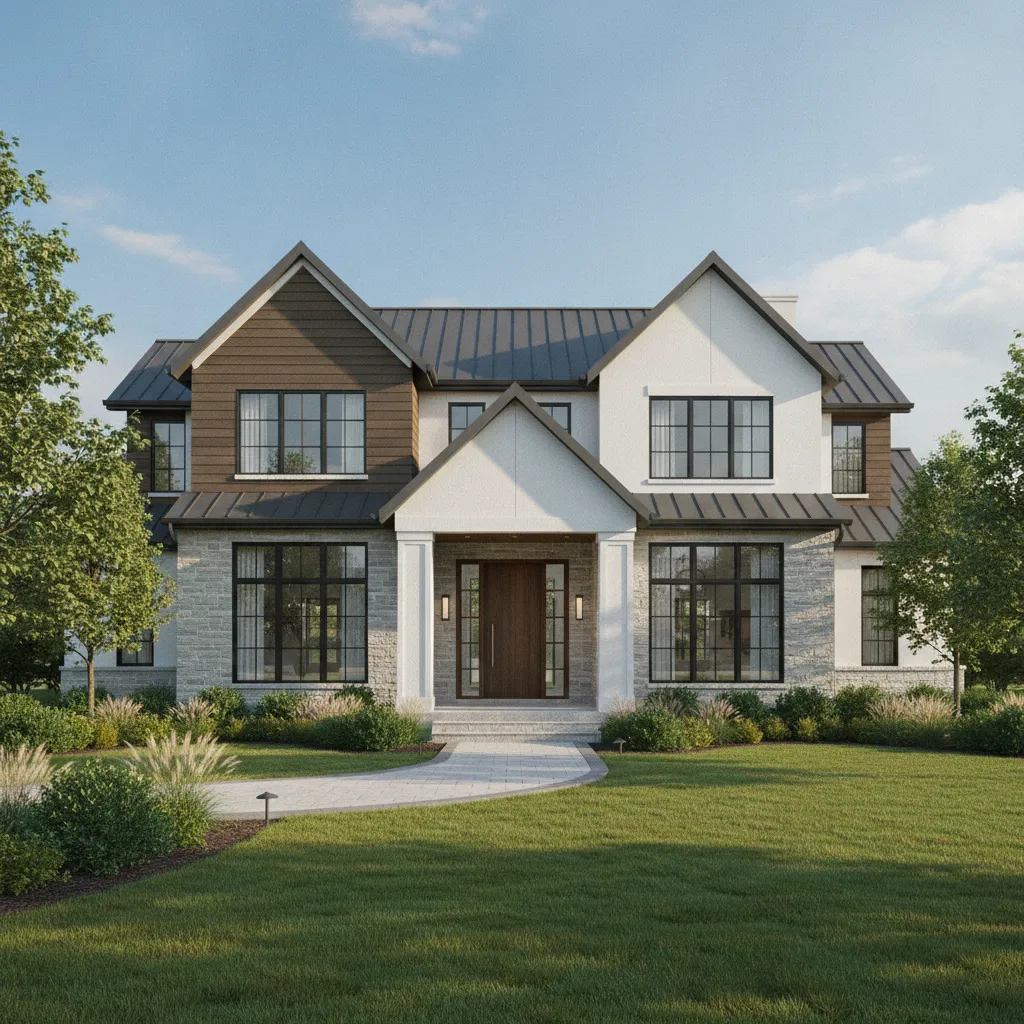
1. Start With the Features That Make the Biggest Visual Difference
Here’s the secret: creating an expensive looking house exterior doesn't require tearing down your home to the studs.
In luxury architecture, visual weight comes down to prioritizing high-impact focal points rather than scattering small, cheap decorations across the facade. Applying Hick’s Law—reducing unnecessary visual clutter—helps focus your budget on structural elements that yield the highest visual return.
Focus your initial budget on these four core structural anchors:
- The Primary Entrance Portico: An architectural overhang or gabled entryway grounds the facade and gives the front door physical depth.
- Architectural Window Casing: Deep, substantial trims create rich shadow lines that frame glass panes naturally.
- Proportional Night Lighting: Layered fixture placement draws the eye to masonry textures and roofline gables after dark.
- Hardscape Arrival Paths: Wide, natural stone walkways create a stately transition from the driveway to the front porch.
By addressing these primary zones first, you establish a high-end foundation before touching decorative accents. Before ordering materials, using a tool to calculate exterior remodeling costs helps ensure your budget stays aligned with your visual goals.
Give the Front Door More Presence
Think about it this way: the front door is the crown jewel of your home’s exterior. A thin, builder-grade door set flush against siding instantly gives away a home's budget origins.
To build a truly commanding entrance, explore these luxury front door ideas:
- Increase Scale and Height: Swap out standard 80-inch doors for an 8-foot solid wood or steel pivot door with integrated full-height sidelights.
- Apply High-Contrast Finish: Choose deep, saturated wood stains (like dark walnut or smoked oak) or rich matte paints (like espresso, charcoal, or deep navy).
- Upgrade Architectural Hardware: Install oversized, 36-inch vertical pull bars in brushed brass or matte black stainless steel rather than standard builder knobs.
- Enclose with Millwork: Frame the entryway with 6-to-8-inch architectural casing or stone jambs to give the entrance physical weight.
Deciding to buy luxury front doors online delivers an immediate upgrade that sets an opulent tone for the entire residence.
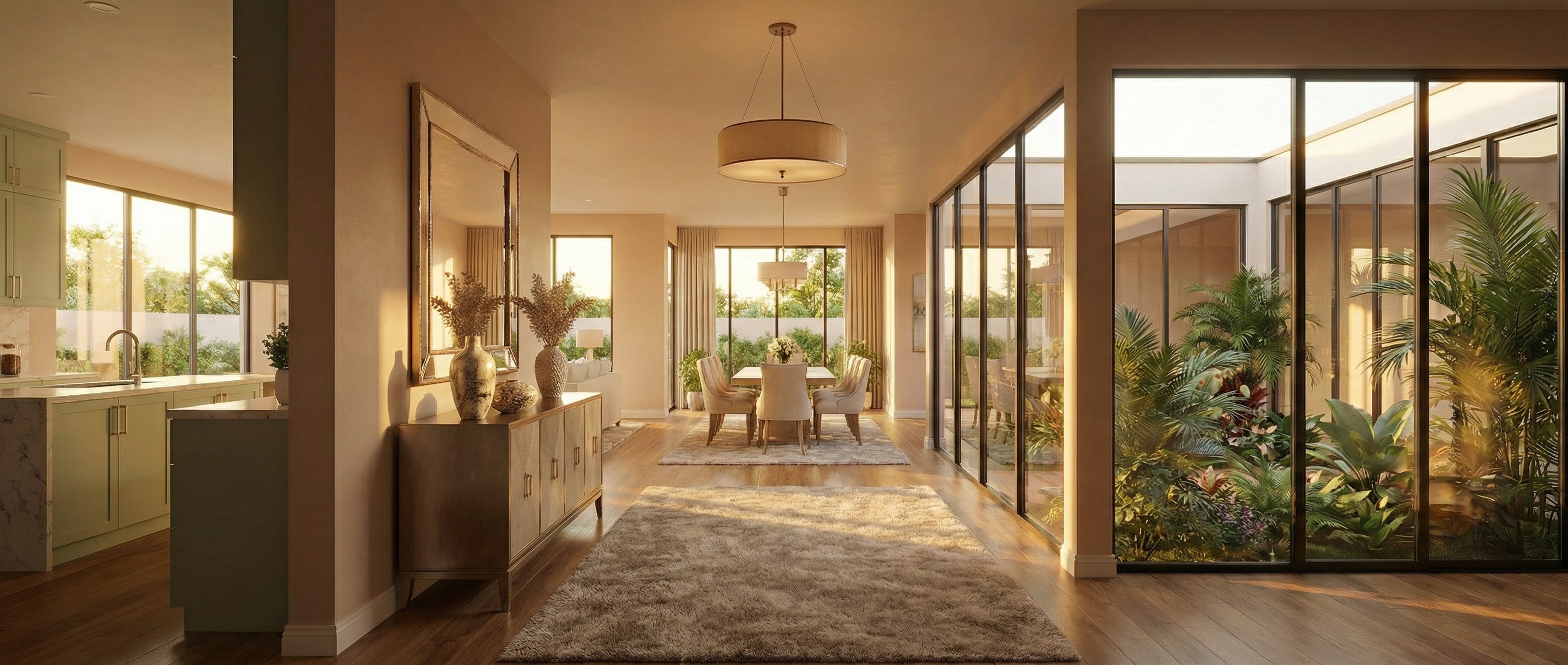
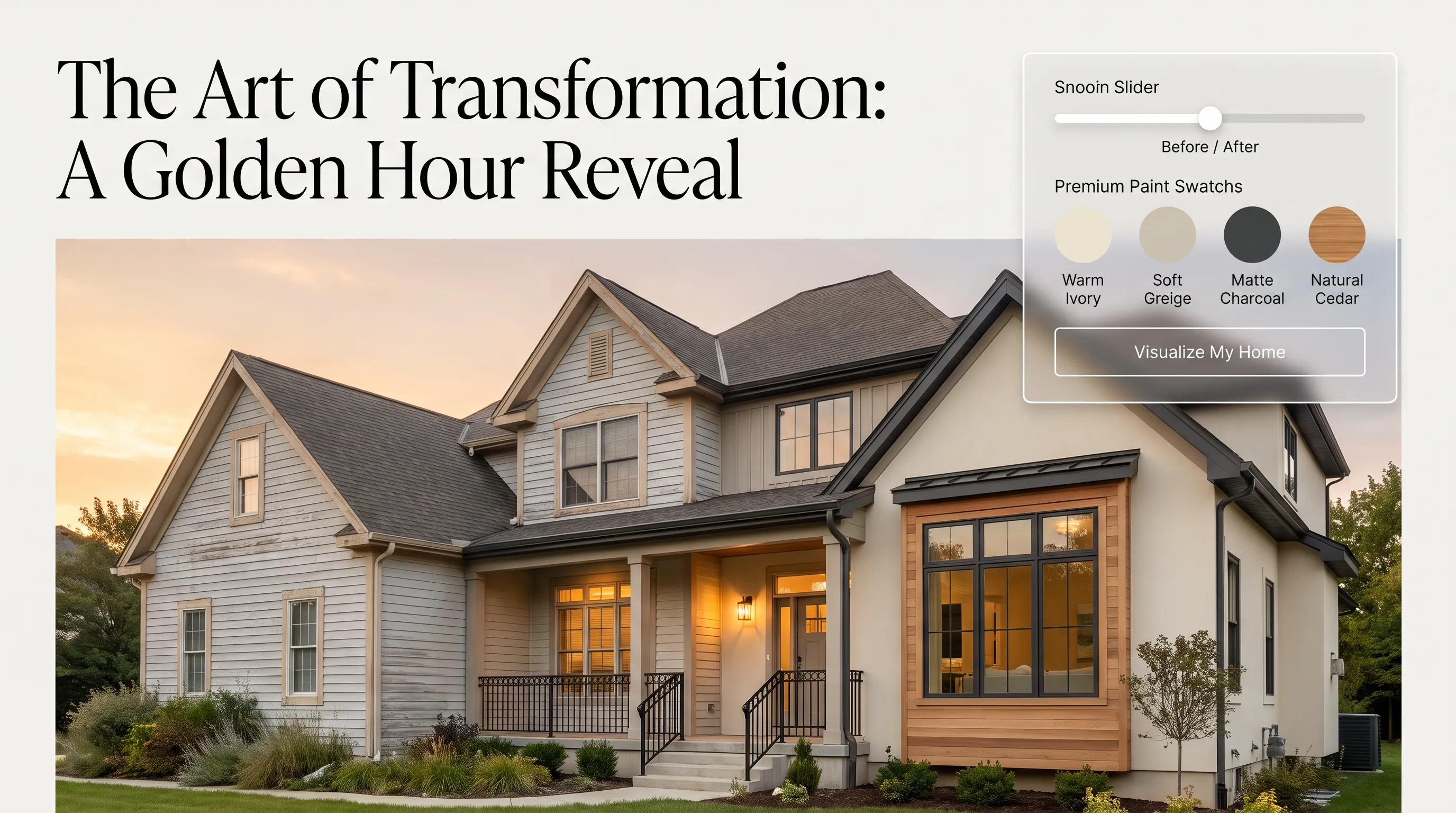
Use a Refined Exterior Color Combination
Here’s where most homeowners miss the mark: cheap-looking homes often rely on flat, single-tone paint schemes or clashing, oversaturated colors.
A custom estate facade uses low-saturation palette ratios to highlight structural depth.
| The High-End Architectural Palette Ratio | Surface Area | Strategic Color Choices |
|---|---|---|
| Dominant Body (60%) | Main walls, siding, or masonry | Warm alabaster, greige, mineral gray, or deep charcoal render |
| Architectural Framing (30%) | Roof eaves, window frames, garage doors | Matte black, dark bronze, or crisp architectural white |
| Statement Accent (10%) | Front entrance door & timber portico | Natural cedar, warm oak stain, or smoked brass accents |
Combining smooth stucco or fiber-cement lap siding with warm natural wood cladding introduces tactile variety that catches sunlight at different angles throughout the day. Reviewing curated luxury exterior color combinations keeps your home’s color story balanced and timeless.
Upgrade Exterior Lighting for a More Polished Look
And it gets better: nothing transforms an ordinary property into an estate like professionally designed architectural lighting.
Standard homes rely on a single overhead porch bulb that creates harsh glare and deep shadows. Upscale properties use indirect, low-glare upscale exterior lighting to paint the home with warm light after sunset.
Essential lighting layers for a polished look:
- Soffit Recessed Downlights: Install flush LED puck lights under roof eaves to wash warm light down textured siding or brick walls.
- Architectural Feature Grazing: Hide narrow-beam LED spotlights in foundation beds to highlight stone pillars, chimney stacks, or gables.
- Path & Step Integration: Use concealed, downward-facing fixtures along steps and walkways to guide visitors safely without exposing bare bulbs.
Choosing to buy upscale exterior lighting fixtures rated at a warm 2700K color temperature gives your home a welcoming, resort-like glow every evening.
Make Windows Look More Intentional
Look closer: flat, flush-mounted windows broadcast budget construction faster than almost anything else.
Custom homes feature windows that feel set deep into the wall structure, framed by thick architectural sills and bold casings.
Ways to make windows look custom:
- Install Simulated Divided Lites (SDL): Windows with thin grid bars (mullions) on both the interior and exterior sides create authentic structural glass panes.
- Upgrade Sill Depth: Add projecting stone or precast concrete window sills beneath glass openings to cast crisp shadow lines beneath the window frame.
- Match Frame Finishes to Roof Trims: Dark bronze or anodized black window frames frame views beautifully while anchoring modern and transitional elevations.
Planning to order custom window trim systems gives plain glass openings an architect-designed finish without requiring full window structural changes.
Improve the Driveway, Path, and Entrance Area
The truth is simple: the journey from the curb to your front door establishes the guest experience before anyone steps inside.
A narrow, 3-foot concrete walkway feels restrictive. An upscale house exterior features sweeping arrival paths that allow two people to walk side-by-side easily.
Upgrading the arrival path:
- Incorporate Paver Borders: Frame existing asphalt or concrete driveways with a double border of dark granite pavers or cobbles.
- Widen Walkway Proportions: Expand main entry paths to 48 to 60 inches using large-format stone pavers or travertine slabs.
- Create Arrival Landing Pads: Build a broad stone step or courtyard landing at the base of the front porch steps to anchor the entryway.
Working with team members to hire luxury hardscape installers ensures proper ground preparation, integrated drainage, and lasting structural elegance.
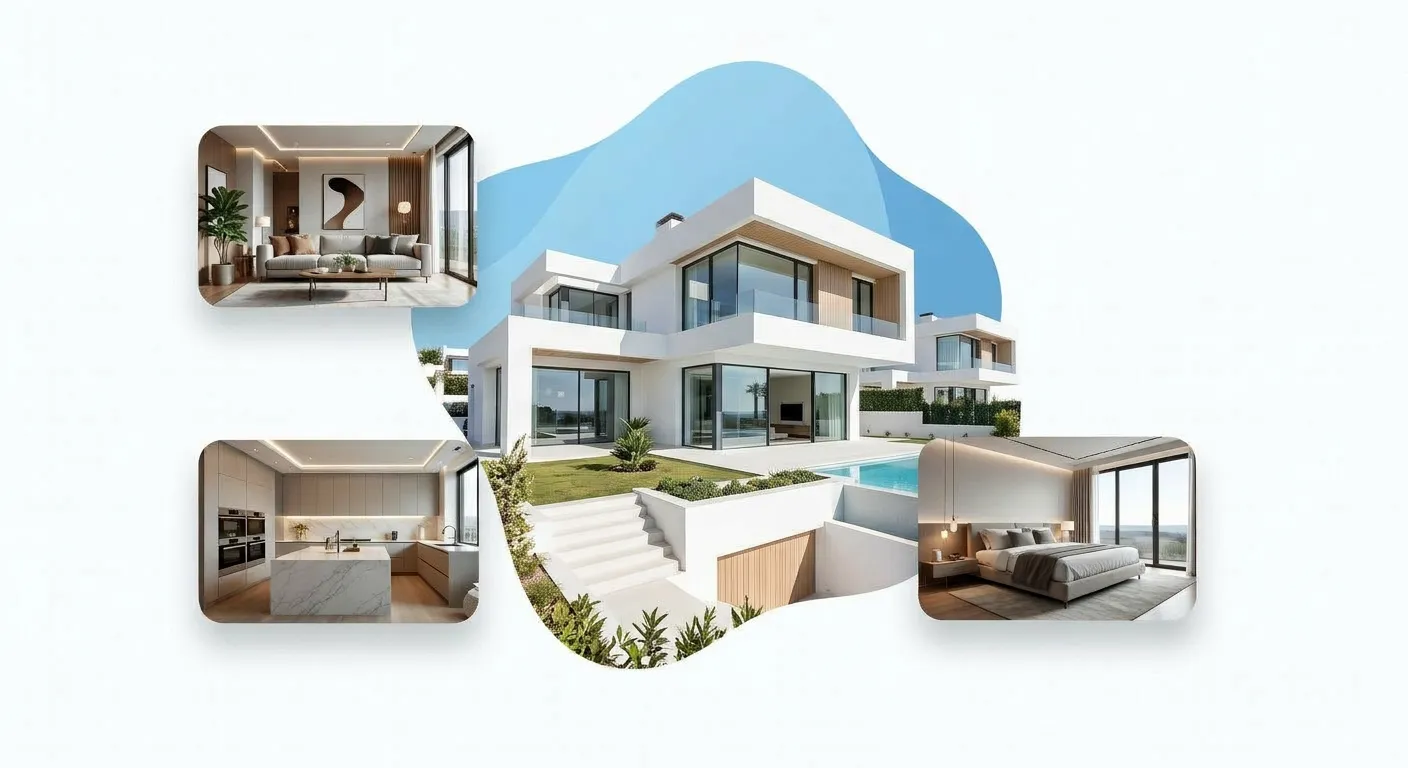
Add Landscaping That Makes the House Feel More Finished
Picture this: even the most extraordinary architectural facade looks incomplete stranded in the middle of a sparse lawn.
High-end luxury landscaping frames the building, using structured greenery to anchor raw masonry into the natural surrounding environment.
Principles for high-end landscape framing:
- Structured Evergreen Framework: Use tailored boxwood hedges, columnar hornbeams, or dwarf conifers to maintain architectural shape through winter months.
- Layered Elevation Heights: Group tall plants at outer building corners to soften hard edges, stepping down to mid-height flowering shrubs, and low ground cover along pathways.
- Architectural Planter Urns: Place heavy stone, fiber-concrete, or metal planters on front porch steps to flank the entrance with lush greenery.
Choosing to buy specimen plants online provides immediate mature greenery, skipping years of waiting for sparse saplings to fill out.
Choose Exterior Materials That Look More Refined
Here’s the rule of thumb: authentic, tactile materials command immediate respect.
Inexpensive homes often cover large expanses with uniform vinyl siding. Upscale facades combine two or three high-grade luxury exterior materials to create rich visual depth.
High-end material pairings to consider:
- Natural Cut Stone Veneer: Limestone, dry-stack fieldstone, or granite bases give foundation walls permanent architectural strength.
- Architectural Standing-Seam Metal: Dark metal accent roofs on porch gables or dormers offer crisp contrast against light siding.
- Smooth Smooth Acrylic Stucco or Render: Monolithic, fine-grained stucco finishes create a sleek, clean surface for modern and transitional elevations.
- Thermally Modified Timber Battens: Vertical cedar, ash, or bamboo battens introduce organic warmth that resists weather rot and color fading.
Exploring options to buy premium exterior cladding materials adds rich texture and long-term durability to flat exterior walls.
Use Symmetry and Repetition to Make the Front Look More Put Together
What does the brain love most? Visual order and balance.
Gestalt visual psychology demonstrates that symmetrical layouts are read by the human brain as organized, calm, and expensive. While full structural symmetry isn't always possible on every floor plan, creating local symmetry around focal points instantly elevates curb appeal.
How to establish visual order:
- Paired Entrance Lighting: Position identical, large-scale sconces on both sides of the main door.
- Balanced Foundation Plantings: Mirror shrub groupings and planter arrangements across the front entrance walkway.
- Aligned Window Centers: Align upper-floor window grids directly with ground-floor openings or door centers whenever possible.
Focusing on a balanced house exterior layout harmonizes mismatched architectural additions into one cohesive design.
See How Small Exterior Changes Could Transform Your House
Here is where technology changes everything: you no longer have to guess how expensive materials will look on your specific home.
Committing money to real stone cladding, dark metal roofing, or custom garage doors without testing material interactions can lead to costly mistakes. Utilizing a web-based house exterior visualizer lets you test endless material, lighting, and color combinations before signing contractor agreements.
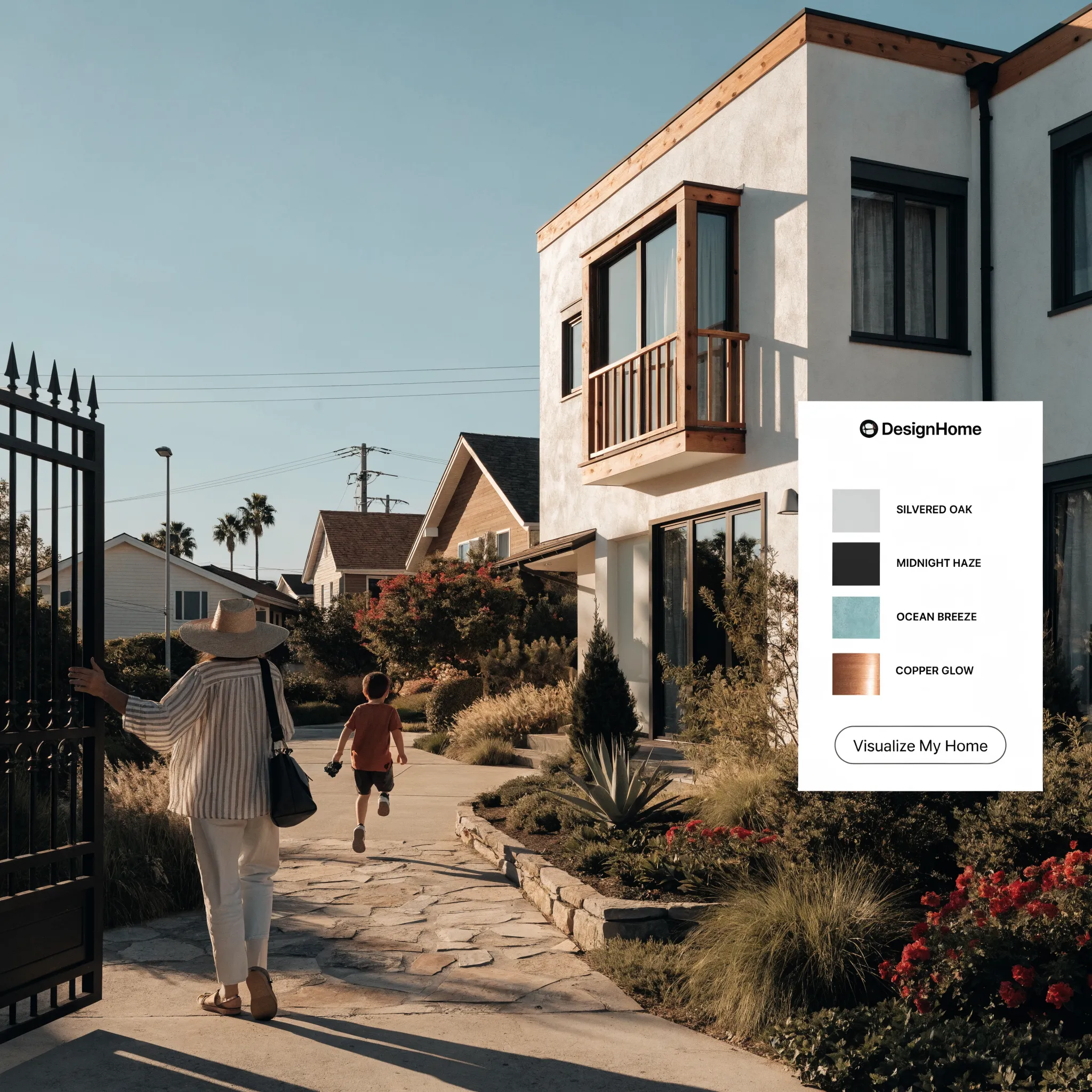
With DesignHome Synthesis™, you can upload a simple photo of your home and let our layout intelligence system render realistic 3D exterior concepts. You can swap paint colors, preview cedar porticos, test window trims, and evaluate night lighting layouts instantly—taking the fear out of your renovation planning.
Create an Upscale Exterior Without a Full Remodel
Let’s break it down: you don't need a multi-year construction project to achieve a luxury exterior design.
By breaking your project into manageable phases, you can systematically elevate your facade while controlling cash flow.
A phased exterior refresh roadmap:
- Phase 1 (Immediate Impact): Paint the front door, install large-scale architectural sconces, and replace outdated house numbers with laser-cut metal digits.
- Phase 2 (Architectural Framing): Add bold window casing, mount an entry portico or canopy, and update garage door panels.
- Phase 3 (Grounding & Surroundings): Install wide paver paths, low-voltage landscape uplighting, and structured evergreen garden beds.
Deciding to buy custom exterior shutter panels or update front porch railings brings immediate architectural structure to aging facades.
Discover Your Home's True Potential with DesignHome Synthesis™
Transforming an ordinary house into an upscale estate is a deeply rewarding journey that elevates your everyday living experience. You don't need to spend $10,000+ on architectural firms or spend months mastering complex design software to realize your dream home.
Your step-by-step luxury elevation checklist:
- Audit Your Elevation: Identify plain wall expanses, undersized trims, and recessed entrances that lack depth.
- Anchor the Entryway: Install a bold front door, wide millwork casing, and an overhead portico shelter.
- Establish Material Contrast: Pair light base cladding with dark bronze window trims and warm timber accents.
- Layer Night Lighting: Combine soffit downlights, up-lighting on stone surfaces, and low-voltage path fixtures.
- Widen Hardscape Paths: Upgrade narrow walkways with natural stone pavers and structured evergreen plantings.
- Visualize Before Building: Use 3D home exterior makeover software to preview material combinations and finalize your design confidently.
Join over a million homeowners who use DesignHome Synthesis™ to explore bespoke facade designs, test high-end material finishes, and execute their exterior makeovers with total confidence. Upload your photo today and discover how extraordinary your home can look.
Frequently Asked Questions: How to Make a House Exterior Look More Expensive
Can an ordinary house exterior genuinely look like a high-end estate without major construction?
Absolutely. Upscale architectural prestige comes down to visual weight, material depth, and intentional focal points rather than square footage alone. Inexpensive facades look flat because they rely on single-tone paint schemes, thin 2-inch window trims, and flush building envelopes. The secret is simple: by introducing deep architectural casing around windows, building out an entry portico overhang, layering 2700K night lighting, and combining natural stone veneer with smooth render, you give the building immediate structural depth. These strategic upgrades alter how sunlight and shadow interact with your facade, creating the look of an architect-designed estate at a fraction of a full reconstruction budget.
What single exterior upgrade delivers the highest return on perceived home value?
Hands down, it is creating a commanding main entrance zone. In Gestalt visual psychology, the human brain automatically evaluates an entire structure starting at its primary anchor point. A standard 80-inch builder door set flush against siding instantly signals budget construction. Swapping it for an 8-foot solid wood or steel pivot door flanked by full-height sidelights instantly changes the building's scale. Frame the doorway with 6-to-8-inch architectural millwork casing or stone jambs, install a 36-inch vertical pull bar in brushed brass, and shelter the entry under a timber-framed gabled portico to establish immediate grandeur.
What exact color formulas and ratios do luxury custom builders use on house exteriors?
Look closer: luxury homes avoid bright, oversaturated primary colors and flat, single-tone paint applications. High-end estate palettes rely on low-saturation earth tones arranged in a strict 60-30-10 architectural balance:
- 60% Primary Base: A sophisticated, low-sheen tone (such as warm alabaster, mineral gray, greige, or deep charcoal stucco render).
- 30% Framing & Structure: Dark contrast tones (like matte bronze, slate, or anodized black) applied to window casings, roof eaves, and garage door frames.
- 10% Tactile Accents: Warm, organic materials (such as natural cedar, smoked oak stains, or brushed metallic fixtures) reserved for the front door and portico ceiling.
This calculated contrast establishes crisp geometric boundaries that look rich under direct sunlight.
Why does standard lighting make a house look cheap at night, and how do I fix it?
Standard homes rely on a single, glare-heavy porch light that casts deep, awkward shadows and leaves the rest of the facade looking flat after dark. And it gets better: fixing nighttime curb appeal does not require rewiring your entire house. Upscale properties use indirect, multi-layered architectural lighting to highlight texture and structure. Position oversized entrance sconces at eye level, install flush LED soffit downlights under roof eaves to wash warm light down stone or render walls, and tuck low-voltage spotlights into foundation garden beds to graze up gables and specimen trees. Keeping all bulbs between 2700K and 3000K creates an inviting, warm glow across your property. You can evaluate night lighting layouts digitally before installing anything.
How can I make basic vinyl or aluminum windows look set-deep and custom-designed?
Here’s the reality: windows broadcast a home's price point faster than almost any other element. Thin frames set flush against siding look industrial and unfinished. You can transform the appearance of standard windows using three custom surface techniques:
- Paint Frames in Dark Bronze or Matte Black: High-contrast frames mimic expensive anodized aluminum architectural windows.
- Add Substantial Casing & Headers: Surround window glass with 4-to-6-inch wide composite trim boards topped with projecting drip-cap headers.
- Upgrade Sill Depth: Install precast concrete or stone sills beneath glass openings to cast sharp shadow lines against the lower wall base.
What material combinations give a house facade immediate architectural weight?
Think about it this way: inexpensive homes often cover entire walls with uniform vinyl siding or flat paint. Upscale elevations combine two or three high-grade, tactile materials to build visual depth across different elevations. Ground foundation walls with natural cut stone veneer or limestone blocks. Transition main wall expanses to smooth acrylic stucco render or dark vertical board-and-batten siding. Finally, introduce organic warmth using thermally modified timber battens on porch ceilings or gable ends. Combining smooth render, rough stone, and warm timber creates a rich, layered aesthetic.
How do hardscape arrival paths change how expensive a house feels from the street?
Pay attention to the ground plane: the journey from the street to your doorstep sets the tone before a guest ever reaches your front porch. Narrow, 30-inch poured concrete paths feel restrictive and uninviting. Upscale exteriors feature wide arrival paths measuring 48 to 60 inches made of large-format stone pavers, travertine slabs, or clay pavers, allowing two people to walk comfortably side-by-side. Framing driveways and walkways with a soldier-course border of contrasting dark granite cobbles adds a clean, custom boundary that ties hardscapes directly into the home’s color story.
How does landscaping frame a home to make it feel like a private estate?
Don't hide the house—frame it. Even an extraordinary architectural home looks unfinished stranded in the middle of a sparse lawn. High-end landscaping acts as a living architectural frame. Plant structured evergreens (like tailored boxwoods or columnar hornbeams) at building corners to anchor the home footprint into the site. Step down to mid-sized flowering shrubs, and finish with feathery ornamental grasses along walkways. Heavy fiber-concrete planter urns flanking front porch steps add weight while bringing natural greenery directly onto raw stone entryways.
What small hardware details secretly ruin an otherwise high-end facade makeover?
The devil is in the small details: in visual design, the Zeigarnik Effect demonstrates that broken, mismatched, or undersized minor hardware details draw a disproportionate amount of negative attention. Rusted mailboxes, tiny builder-grade house digits, tattered door chimes, and visible utility meters ruin the illusion of fresh paint or stone cladding. Replace small address numbers with large 6-to-8-inch floating metal digits mounted vertically. Unify all exterior metals—door handles, sconces, mailbox, and house digits—under one finish, such as matte black or brushed bronze. Lastly, build slatted timber screens to hide AC compressors and electrical meters completely.
How can I use symmetry and visual order to fix an awkward, asymmetrical front elevation?
The human brain is hardwired to read symmetrical layouts as calm, organized, and high-value. Here's how to restore order: while full structural symmetry isn't always possible on every elevation, creating local symmetry around primary focal points creates an immediate sense of equilibrium. Pair large-scale wall sconces symmetrically on both sides of the main doorway, mirror evergreen planter arrangements across arrival steps, and align foundation foliage heights equally across window centers. Aligning surrounding elements restores visual order even on complex, multi-gabled facades.
How do I preview luxury materials and lighting layouts on my house before spending money?
Testing before buying changes everything: committing thousands of dollars to stone cladding, dark roofing, or custom door orders without testing how materials interact on your physical home is a risky gamble. Historically, seeing high-end 3D previews required paying over $10,000 in architectural retainers or learning complex drafting tools. Today, you can use DesignHome Synthesis™ to discover bespoke, high-end exterior concepts for your home in minutes. By simply uploading a photo of your existing facade or floor plan into our layout intelligence system, you can swap paint tones, preview cedar porticos, test window trims, and evaluate night lighting layouts side-by-side with total confidence.


