

You walk through the doorway into your living room, look around, and feel your eyes darting nervously from corner to corner.
There is a sofa on one wall, a television on another, a coffee table in the center, and a few picture frames scattered across the perimeter. Everything is functionally in place, yet the room feels strangely flat, scattered, and ungrounded.
Why does this happen? Because the room lacks a clear visual anchor.
A well-designed focal point serves as the visual "hero" of a space. It gives the eye an immediate, welcoming place to land, establishes the room’s personality, and organizes the surrounding layout. Whether you have an architectural fireplace, a massive picture window, or a blank drywall box, here is how to find, design, and balance living room focal point ideas like a seasoned interior designer.
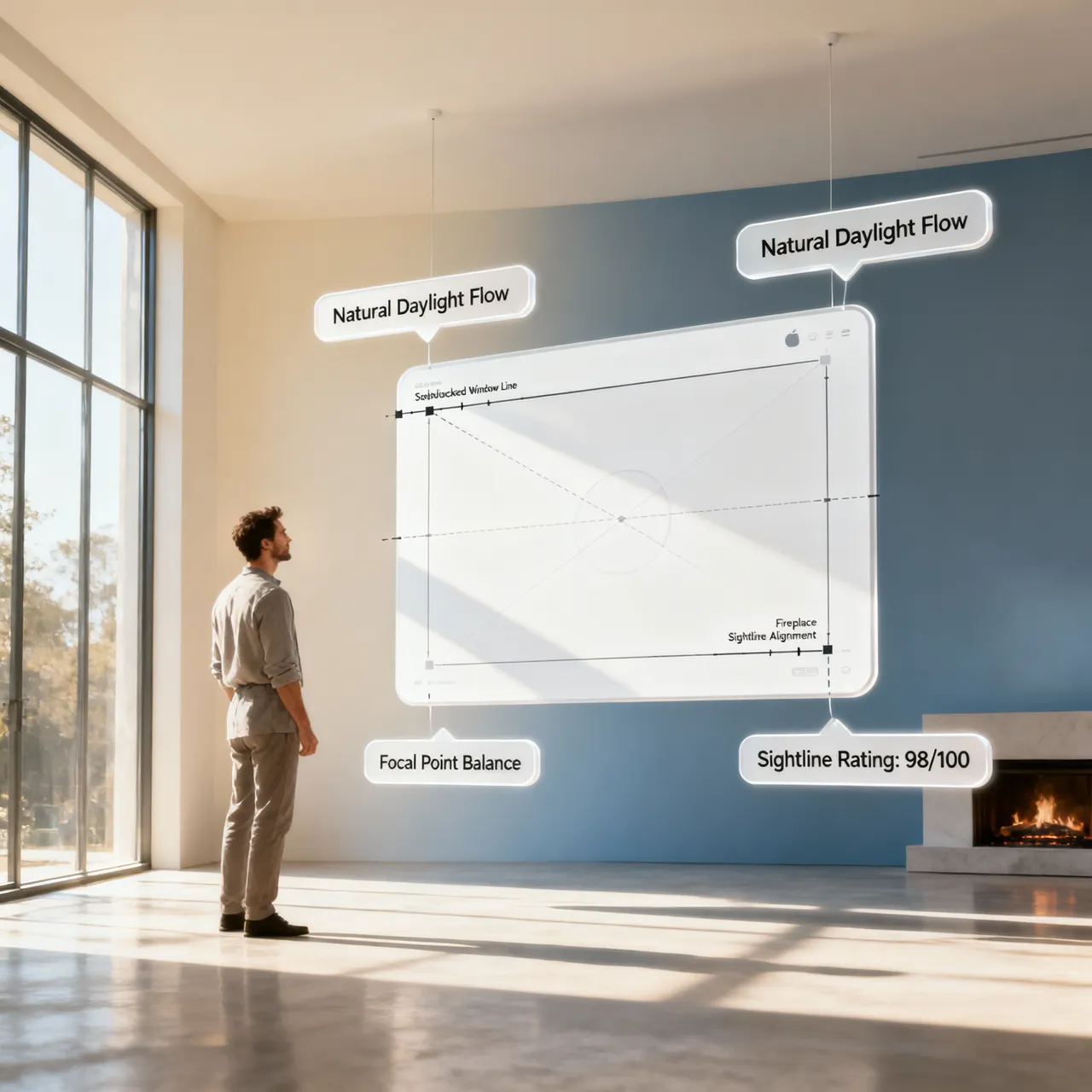
1. Find the Feature Your Living Room Already Does Best
Before spending money on accent wall materials, gallery frames, or custom cabinetry, take a step back and inspect your room’s natural architectural bones.
The easiest, most budget-friendly way to create a living room focal point is simply leaning into the strongest structural asset your home already possesses.
[ Natural Structural Assets ]
             |
             +---> Architectural Fireplace Mantel  ===> Frame with Stone & Low Lighting
             +---> Oversized Floor-to-Ceiling Window ===> Highlight with Framed Drapes
             +---> Exposed Brick / Vaulted Beams   ===> Highlight with Up-Lighting
Ask yourself these diagnostic questions:
- Is there a structural centerpiece? Do you have a brick fireplace hearth, exposed ceiling beams, built-in shelving, or a dramatic bay window?
- Where does your eye naturally look? When you step through the main entrance, which wall naturally commands your immediate gaze?
- What is the room’s main activity? If the space is built primarily for quiet evening reading, an expansive built-in library wall makes far more sense than a massive television.
Identifying your room’s strongest existing asset prevents you from fighting your home’s natural architecture.
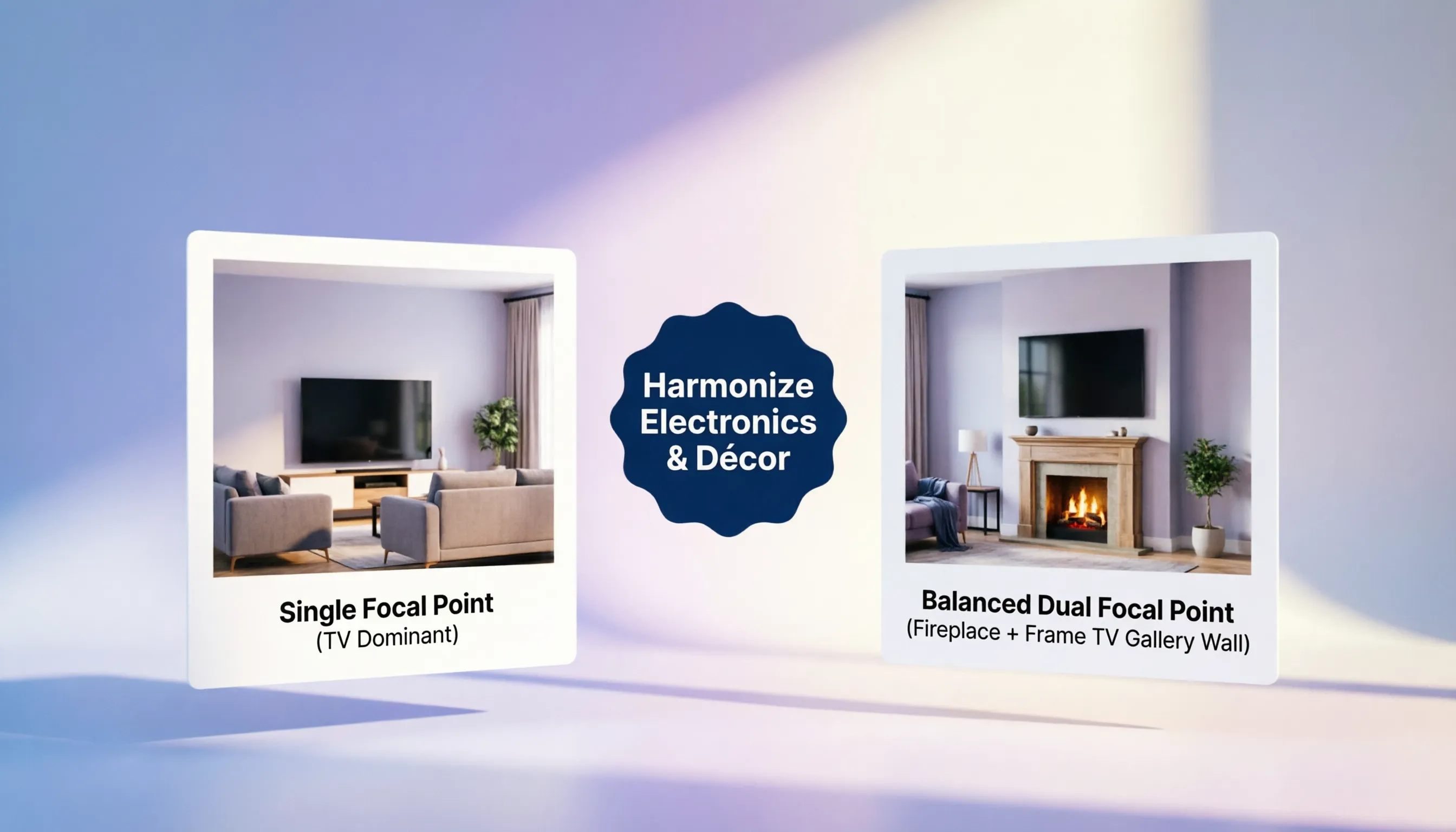
2. Make a Fireplace the Centrepiece Without Overdecorating the Mantel
An architectural fireplace is the classic centerpiece of residential interior design. However, homeowners frequently ruin its natural beauty by crowding the mantelpiece with dozens of tiny picture frames, candles, and decorative knick-knacks.
Creating high-impact fireplace focal point ideas relies on the principle of restrained contrast—letting a single, powerful element sit above the mantel so the masonry structure can breathe.
[ 10 Small Photo Frames ]
[ Scattered Candles & Vases ]
[ Dangling Garland Strands ]
+----------------------------+
|  One Oversized Fine Art    |
|  or Architectural Mirror   |
+----------------------------+
[ Clean Mantel Surface + 2 Vases ]
Master mantelpiece styling:
- Hang One Oversized Anchor Piece: Place a single piece of large-scale canvas art or a framed arch mirror directly above the mantel shelf. Ensure the artwork spans roughly two-thirds the total width of the fireplace surround.
- Keep the Surface Clean: Limit mantel top accessories to just two or three items of varying heights—such as a pair of ceramic stoneware vases or a single sculptural metal object placed off-center.
- Contrast Material Finishes: If your fireplace surround is built from dark, rough fieldstone, pair it with smooth, polished brass or light wood accents to create eye-catching texture contrast.
3. Turn One Oversized Artwork Into a Wall Worth Looking At
If your living room is a plain, featureless box lacking a fireplace or bay window, you don't need to hire a contractor to build custom millwork.
Hanging one dramatic, oversized fine art piece is the single fastest way to build an elevated living room wall focal point ideas strategy from scratch.
Rules for hanging statement wall art:
- Obey the 60% Rule: Your artwork or canvas set should fill roughly 60% to 75% of the available open wall space above your primary sofa or sideboard console.
- Hang at Eye Level: Center the middle of the artwork roughly 57 to 60 inches off the floor (eye level for the average adult). Hanging artwork too high near the ceiling completely detaches it from surrounding furniture.
- Bridge Room Colors: Choose an art piece that incorporates your primary wall neutral alongside one or two rich accent tones found in your throw blankets, area rug, or velvet throw pillows.
For professional guidelines on residential space planning, artwork scaling, and color coordination, consult the American Society of Interior Designers (ASID).
4. Use the View Outside as Part of the Living Room Design
If your living space features a large picture window, a arched transom, or sliding glass doors overlooking a lush garden, mature trees, or a city skyline, stop covering it up!
An outdoor view makes an extraordinary, ever-changing living room window focal point that brings natural light and organic beauty straight inside.
[ Outdoor Garden / Skyline View ]
               |
               v
[ Framed Picture Window ]
               |
               +---> Mount Curtain Rods High & Wide (Outside Window Frame)
               +---> Hang Sheer Linen Drapery Panels (Diffuses Direct Glare)
               +---> Arrange Low-Profile Seating Inward (Unobstructed View)
How to frame an exterior window view:
- Mount Drapery High and Wide: Install your curtain rod 4 to 6 inches above the window frame (or directly beneath the ceiling trim) and extend the rod 12 inches past both sides of the window casing. This allows drapes to rest outside the glass when open, maximizing light and frame size.
- Use Low-Profile Furniture: Keep sofa backs and accent armchairs under 32 inches tall near window walls so furniture frames never chop off natural sightlines to the outdoors.
- Diffuse Midday Sun Glare: Hang sheer linen or light-filtering woven shades to block intense sun glare without obscuring the organic outdoor silhouettes.
If you are coordinating paint shades with bright sunlit windows, explore our guide on paint colors for homes with natural light to pick wall tones that soften midday glare without washing out room finishes.
5. Create a Statement Wall With Texture, Colour, or Material
When you want to transform a flat drywall span into an architectural feature, building a living room feature wall ideas layout adds rich depth and visual interest without overwhelming the room.
The key to a successful accent wall is selecting materials that complement—rather than clash with—your existing flooring and trim.
Key design execution tips:
- Go Dark Behind Wood Furniture: Painting an accent wall in a deep, matte slate or forest green creates dramatic contrast against natural oak or light leather furniture.
- Incorporate Vertical Wood Slats: Mounting vertical wood slats across a central wall span adds rich acoustic dampening while visually raising low ceiling lines.
- Keep Adjacent Walls Neutral: Keep the remaining three room walls painted in a soft, warm neutral (like warm off-white or greige) so the feature wall remains the undisputed hero of the space.
6. Design a Media Wall That Looks Intentional Even When the TV Is Off
In most modern homes, the television is the active center of daily entertainment. However, a massive black glass box mounted on a plain white wall creates an eyesore when turned off.
Designing a modern living room media wall ideas setup is about blending electronics seamlessly into an elegant architectural composition.
[ Integrated Media Wall Center ]
                 |
                 +---> Mount Picture-Frame TV (Displays Digital Fine Art)
                 +---> Build Low Floating Credenza Cabinet (Conceals All Wires)
                 +---> Flank with Asymmetrical Open Shelving (Displays Ceramic Art)
                 +---> Apply Dark Accent Paint / Slat Panels Behind Screen
Smart entertainment wall integration strategies:
- Use Picture-Frame Televisions: Invest in a TV (such as the Samsung Frame) that displays matte, low-glare digital fine art and photography whenever the screen is powered down.
- Conceal Wires Behind Floating Credenzas: Mount a sleek, low-profile floating wooden credenza beneath the television to hide cable boxes, gaming consoles, and power cords inside closed cabinetry.
- Paint the Screen Backing Dark: Paint the wall section directly behind your television screen in a deep charcoal, navy, or black shade. The black screen naturally melts into the dark wall paint when turned off.
To review official safety guidelines on television mounting, wall anchor weight limits, and concealed wire conduit safety codes, consult the International Code Council (ICC).
7. Let Built-In Shelves Tell a Story Instead of Looking Like Storage
Custom built-in bookcases or open shelving units make extraordinary focal features when styled intentionally.
However, overloading shelves with stacks of old paperbacks, plastic storage bins, and tangled cords transforms an architectural feature into messy storage clutter.
- Plastic bins & loose paper stacks
- Zero empty breathing space
- 1/3 Ceramic Art, Stoneware & Framed Art
- 1/3 Empty Negative Space (Lets items breathe)
Follow the "Rule of Thirds" for bookshelf styling:
- Divide Shelf Content evenly: Allocate one-third of shelf space to books (stacked both vertically and horizontally), one-third to decorative ceramic art or framed photos, and leave one-third completely empty as negative breathing space.
- Mix Vertical and Horizontal Stacks: Stack three or four hardbound books horizontally to act as a pedestal for a small ceramic bowl or brass object.
- Add Under-Shelf LED Accent Lights: Install warm, low-voltage LED strip lights beneath each shelf line to cast a soft, warm glow across your book collections at night.
8. Use a Statement Light Fixture to Draw the Eye Upward
If your room features tall vaulted ceilings, exposed roof beams, or double-height architectural spans, your focal point doesn't have to live at eye level.
Installing a sculptural living room statement lighting fixture draws eyes upward, emphasizing ceiling height and filling vertical air space elegantly.
Lighting selection guidelines:
- Size Proportional to Room Volume: To calculate the ideal light fixture diameter in inches, add the room's length and width in feet (e.g., a 15' x 20' room needs a 35-inch wide chandelier).
- Equip with Dimmable Warm LEDs: Always install dimmable LED bulbs rated between 2700K and 3000K (Kelvin) to ensure overhead light casts a cozy, warm glow rather than a harsh, clinical glare.
For detailed technical specifications on residential lighting standards, bulb brightness ratings, and color rendering indices, consult the Illuminating Engineering Society (IES).
9. Give an Empty Corner a Purpose With One Distinctive Feature
Awkward, underutilized room corners frequently become chaotic clutter magnets for stray shoes, workout gear, or abandoned boxes.
Giving an empty corner a clear, functional purpose transforms dead floor space into an inviting secondary centerpiece.
[ Awkward Unused Corner ]
            |
            +---> [ Deep Velvet Swivel Accent Chair ]
            +---> [ Tall Architectural Arc Floor Lamp ]
            +---> [ Small Round Drink C-Table ]
            +---> [ Large Potted Fiddle-Leaf Fig Plant ]
            |
            v
[ Cozy Secondary Reading Sanctuary ]
How to style an intentional corner:
- Build a Cozy Reading Nook: Position a deep, comfortable lounge chair paired with an arc floor lamp, a small drink c-table, and a soft wool throw blanket.
- Add a Large Architectural Houseplant: Place a tall, broad-leaf plant—such as a Fiddle-Leaf Fig, Monstera, or Bird of Paradise—inside a stoneware planter to bring organic height and vibrant green life into dark corners.
- Set Up a Sculptural Pedestal Display: Place a stone or wooden pedestal topped with a striking ceramic vase or bronze sculpture illuminated by a wall sconce.
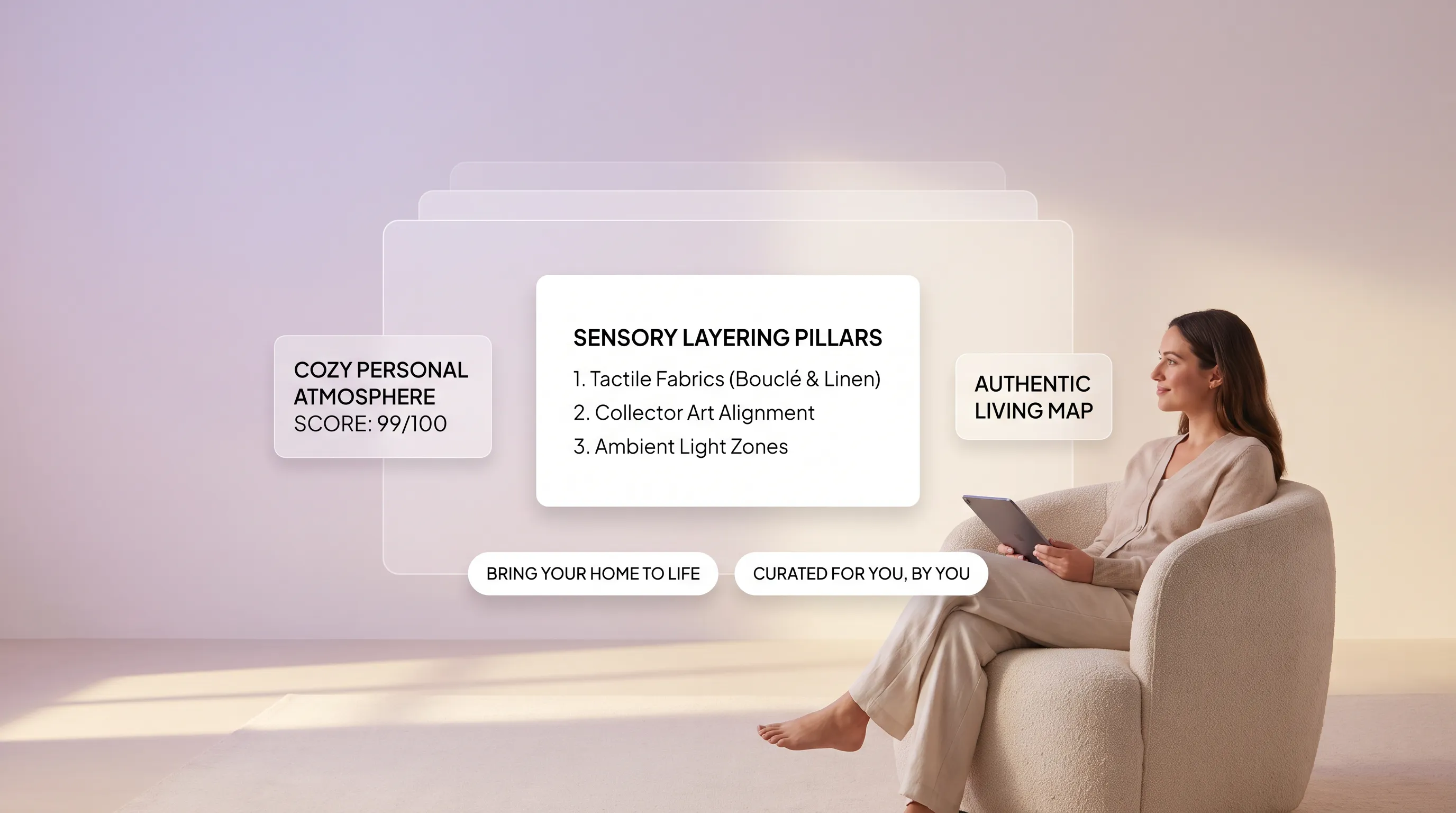
10. Make a Large Mirror the Feature Without Creating Visual Clutter
A large wall mirror is a versatile design tool. It reflects natural daylight into shadowed corners, creates an illusion of expanded depth, and adds instant elegance.
However, a mirror only looks as good as what it reflects.
Rules for styling a large mirror living room ideas centerpiece:
- Reflect Light and Outdoor Greenery: Position large floor or wall mirrors on walls perpendicular or opposite to main picture windows so they reflect outdoor greenery and sunlight across the entire room.
- Scale the Mirror Frame Dramatically: Choose mirrors with thick, architectural frames—such as black iron grids, arched brass frames, or carved natural oak—to make the mirror look like a built-in window.
- Check the Reflected Sightline: Before drilling wall anchors, hold the mirror in place and stand at your primary sofa. Ensure the mirror reflects artwork, lighting, or natural sunlight rather than messy kitchen counters or open bathroom doors.
11. Choose a Focal Point for a Small Living Room Without Overwhelming It
When working with a compact, small-footprint living room, attempting to incorporate multiple dramatic features (such as a dark accent wall, a massive media console, and a heavy fireplace) makes the space feel cramped and cluttered.
Executing small living room focal point ideas successfully relies on picking one single, perfectly scaled feature and keeping surrounding decor lightweight.
Smart small-space focal strategies:
- Focus Upward with Vertical Wall Art: Hang a tall, vertical framed print above a slender sofa to draw the eye upward toward the ceiling line.
- Opt for Raised, Leggy Furniture: Pair your focal feature with couches, coffee tables, and chairs raised on exposed wooden or metal legs to reveal open floorboards underneath.
- Use Subtle Tonal Contrast: Avoid stark black-and-white feature walls in tiny rooms. Instead, use soft tonal variations—such as warm cream, sage, or light taupe—to create subtle depth without shrinking the room.
If you are picking paint finishes for compact layouts, read our guide on paint colors for small rooms to combine light-reflecting palettes with space-saving furniture arrangements.
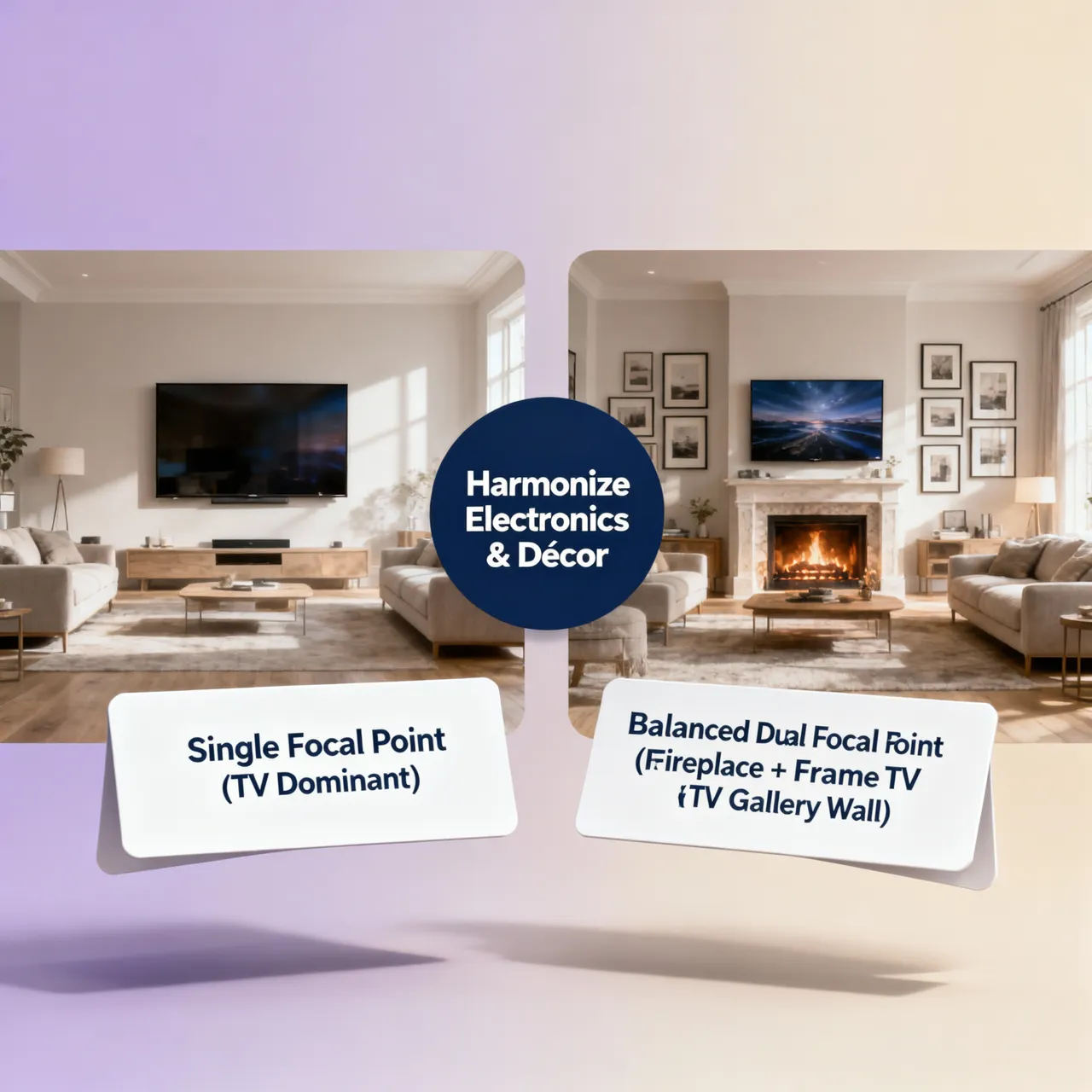
12. Balance Two Strong Features When Neither Can Be Ignored
What happens when your living room has two competing architectural features that cannot be moved—such as a stone fireplace on one wall and a massive picture window or TV media wall directly opposite?
When dealing with a living room with two focal points, you must establish a clear hierarchy: one feature leads as the primary hero, while the second plays a supporting role.
How to handle dual focal features:
- Stack Fireplace and TV Vertically: Mount your flat-screen television directly above the fireplace mantel (using a pull-down wall mount if needed for viewing ergonomics) to combine both elements into a single vertical centerpiece.
- Use L-Shaped Seating Arrangements: Position an L-shaped sectional or a sofa paired with swivel armchairs between both features. Swivel chairs allow guests to turn toward the fireplace for conversation or pivot toward the TV or window view effortlessly.
- Keep One Feature Neutral: If your television wall is bold and dark, keep the window treatment subtle and sheer so the two walls don't fight for visual dominance.
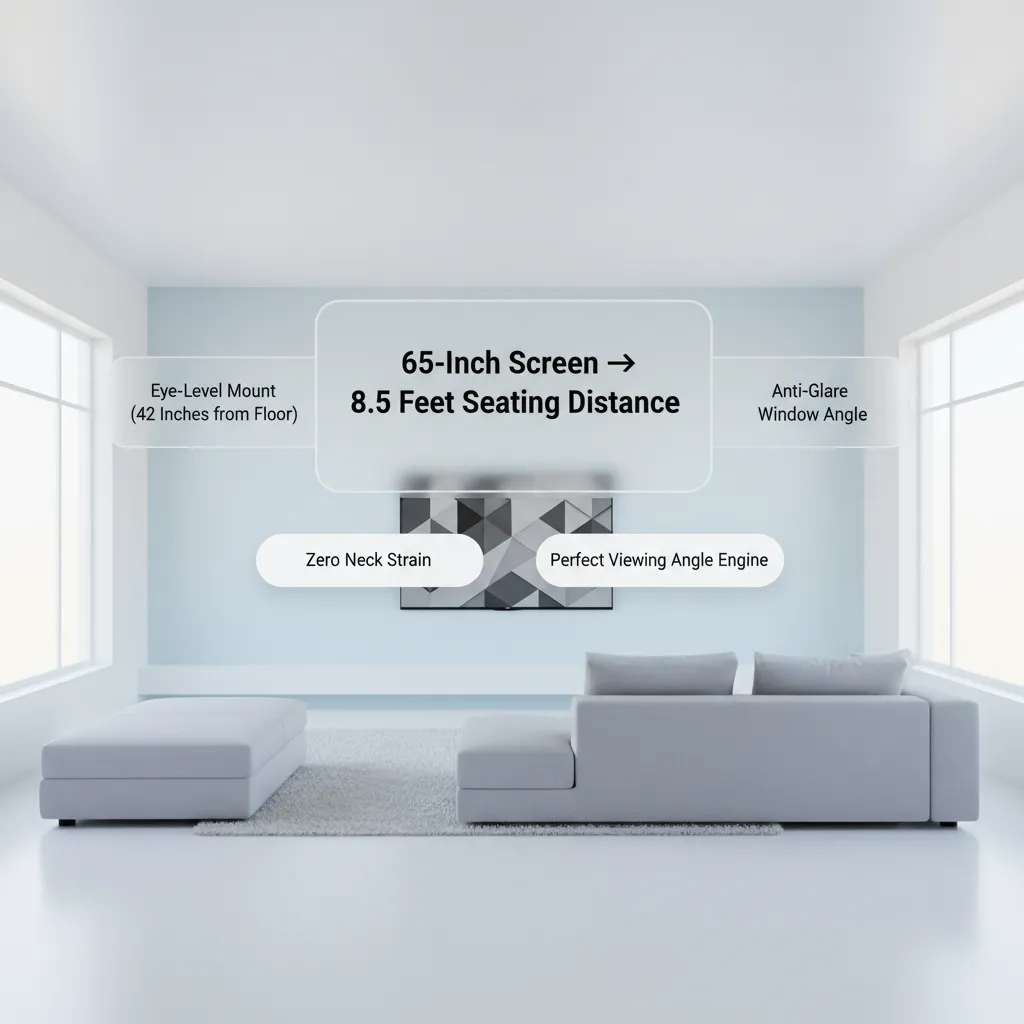
13. Test Your Focal Point Before Buying Materials or Decor
Buying expensive wallpaper rolls, ordering custom built-in cabinetry, or drilling heavy wall anchors only to realize the feature looks awkward or blocks doorway traffic is a costly, frustrating mistake.
Testing your focal point digitally and physically on site protects your budget and saves hours of effort.
  [ Step 1: Measure Wall Dimensions & Seating Distances ]
                             |
  [ Step 2: Mark Outlines on Wall using Blue Painter's Tape ]
                             |
  [ Step 3: Test Lighting, Sightlines & Traffic Clearance ]
                             |
  [ Step 4: Finalize Materials & Execute Design Plan ]
                             |
  [ Step 5: Enjoy Your Anchored, Beautiful Living Room ]
Follow this 4-step layout preview sequence:
- Measure Wall Clearances Accurately: Record total wall length, ceiling height, and seating viewing distances before ordering artwork or media furniture.
- Tape Outlines with Painter's Tape: Use blue painter's tape to mark the exact outer dimensions of candidate artwork, mirrors, or media consoles directly onto your drywall.
- Walk the Room: Practice walking through daily traffic routes—from entryway to seating—to ensure your candidate focal feature doesn't restrict walking paths or block doorways.
Step Into Your Future Room Layout Before Moving Heavy Furniture
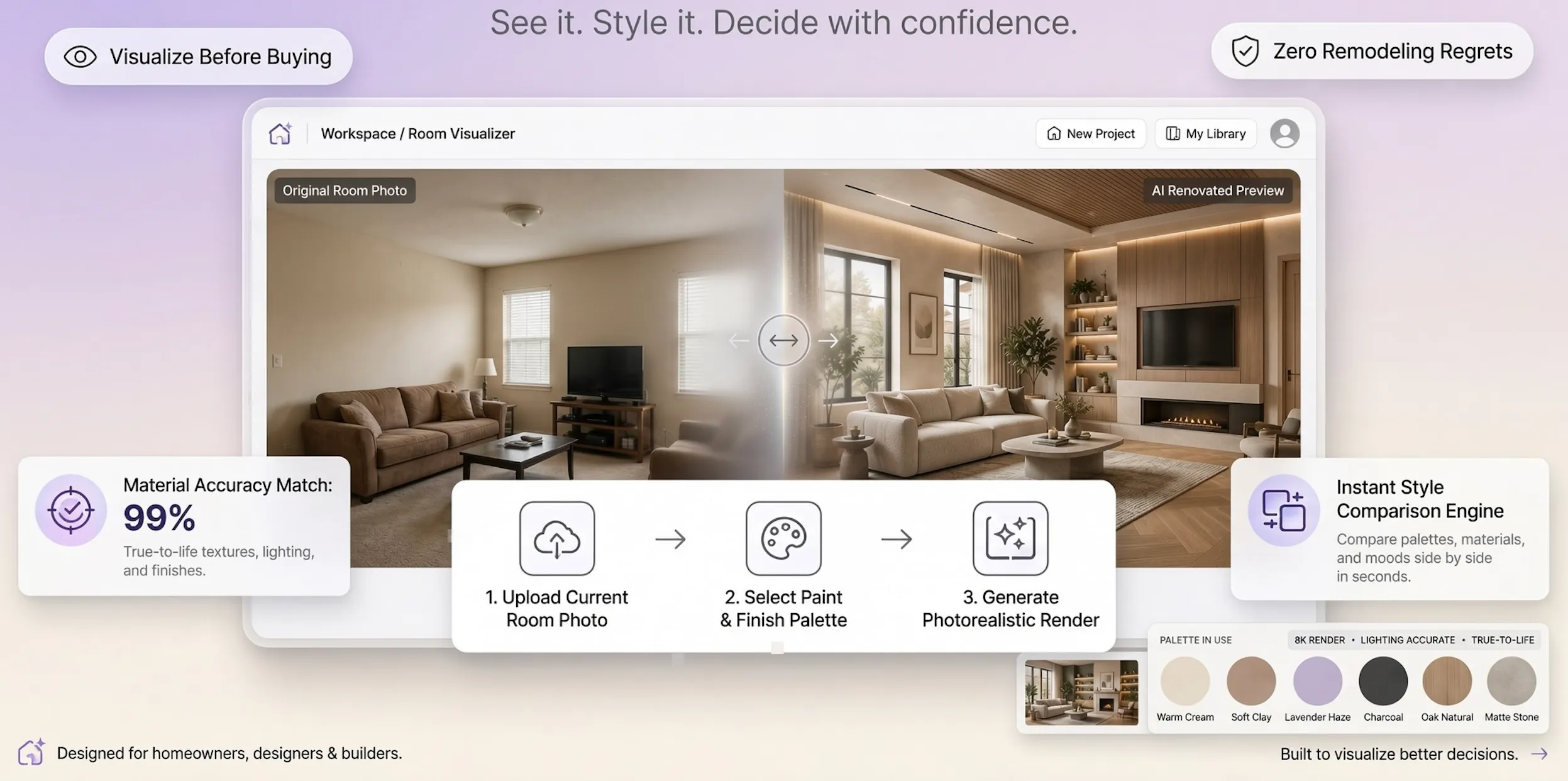
What if you could eliminate spatial guesswork, test accent wall colors, and see exactly how a fireplace surround, built-in library, or statement mirror will look inside your exact space before spending a single dollar on materials or contractors?
When you are trying to design a focal feature, trying to picture how artwork scales, wallpaper patterns, and furniture orientations will transition across your room can feel like a stressful guessing game. A single miscalculation on paper can turn into a frustrating return or a costly contractor change order.
With DesignHome, you don't need to learn complicated CAD design software or deal with steep technical learning curves. You can simply upload a picture or floor plan of your room to test layout ideas, experiment with accent walls, compare media console finishes, and unlock custom spatial possibilities tailored to your exact floor plan.
Eliminate visual design uncertainty—visualize and refine your dream living room vision with total confidence before demolition or decorating day ever begins.
External Resources & Industry Standards
To explore deeper technical insights into home space planning, trade safety, and building codes, consult these authoritative industry resources:
- American Society of Interior Designers (ASID) – Professional standards for residential space planning, material selection, and structural layouts.
- International Code Council (ICC) – Residential building codes, television mounting safety, and electrical wiring standards.
- Illuminating Engineering Society (IES) – Residential lighting standards, bulb warmth ratings, and task lighting guidelines.
- Paint Quality Institute – Expert advice on wall surface preparation, washable paint sheens, and moisture-resistant finishes.
- National Fire Protection Association (NFPA) – Residential fire safety codes for fireplace clearances, mantel heat guards, and electrical wiring.
Frequently Asked Questions About Living Room Focal Points
What is the most common focal point in a living room?
An architectural fireplace is traditionally the most common focal point in residential living rooms. In modern homes without a fireplace, large picture windows with exterior views, televisions mounted on integrated media walls, or oversized fine art pieces serve as the primary visual anchors.
Can a TV be the main focal point in a living room?
Yes, a television can serve as a functional focal point, especially in family media rooms. However, to keep it from looking like a cold black box when turned off, integrate it into a media wall with built-in cabinetry, use a picture-frame TV that displays digital art, or paint the wall directly behind the screen in a deep, dark accent shade.
How do you create a focal point in a living room with no fireplace or views?
In a plain, featureless room, create a focal point by hanging one piece of oversized fine art (filling 60% to 75% of the wall space above your sofa), installing a textured vertical wood slat or board-and-batten accent wall, building a floor-to-ceiling library bookshelf, or leaning a large arched floor mirror opposite an entry doorway.
How high should artwork be hung above a sofa to act as a focal point?
Artwork should be centered roughly 57 to 60 inches off the floor (eye level for the average adult). When hanging artwork directly above a sofa or sideboard, ensure the bottom of the frame sits 6 to 8 inches above the top edge of the sofa back so the art connects visually with the furniture.
How do you balance two focal points in one room (like a TV and a fireplace)?
Establish a clear visual hierarchy: make one feature dominant and the other supporting. You can combine them by mounting the TV directly above the fireplace mantel, or arrange your seating in an L-shape using 360-degree swivel armchairs so guests can easily pivot toward either feature.
What size mirror should I use for a living room focal point?
A focal mirror should measure roughly two-thirds to three-quarters the width of the furniture piece sitting beneath it (such as a fireplace mantel, sofa, or console table). Ensure the mirror reflects an attractive source of natural light, artwork, or outdoor greenery rather than visual clutter.


