

You sit at your desk at 11:00 AM, rubbing your tired eyes while staring at a shadowy monitor screen.
Despite the sun shining brightly outdoors, your workspace feels like a dim subterranean cave. You have an overhead bulb blasting a harsh, unnatural glare from above, while the far corner of your room swallows every ray of sunlight that tries to sneak past heavy window drapes. You lean back in your chair, look at your gloomy surroundings, and ask yourself: Why am I working in the dark when I have a window right down the hall?
Here is the undeniable truth of workspace ergonomics: learning how to improve natural light in a home office isn't about tearing down structural walls—it is about harvesting available daylight, eliminating visual blockages, and bouncing light deep into your room.
Working in a dark home office drains your mental stamina, triggers severe eye fatigue, and ruins your daily focus. By auditing light obstructions, placing your desk perpendicular to glass frames, hanging light-filtering window treatments, and positioning strategic mirrors, you can build a sun-drenched, high-performance workspace that fuels continuous productivity. For a deeper approach to layered illumination, see our lighting fixes for dark rooms with limited natural light.
Whether you are configuring a tight spare room nook or optimizing a shaded basement footprint, here is how to plan, layer, and execute a daylight-maximized home office step by step.
1. How to Improve Natural Light in a Home Office
Before buying expensive desk lamps or ordering new paint cans, step back and evaluate how daylight flows through your room throughout a 12-hour cycle.
Most dark workspaces suffer not from a total lack of windows, but from poor spatial arrangements that absorb daylight before it ever reaches your eyes.
Dark Walnut Furniture
Facing Wall
= Brain Fog & Eye Strain
90° Desk Position
Light Walls
= All-Day Energy & Flow
To execute a high-impact plan to improve natural light in a home office and enjoy a sun-filled natural light home office, structure your layout around three core rules:
- Establish Unbroken Light Corridors: Keep the direct visual path between your main window frame and your desktop surface 100% clear of tall bookcases or high-backed chairs.
- Harvest Indirect Side Illumination: Orient your desk so daylight washes sideways across your typing deck rather than blasting directly behind your monitor screen.
- Multiply Available Daylight with Light-Reflective Finishes: Use satin wall paints, light wood veneers, and mirrored surfaces to bounce incoming photons deep into shadowy corners.
Explore our architectural strategies for home office design frameworks for productivity and visual harmony to learn how spatial proportion principles transform living spaces.
2. Identify What's Blocking Natural Light From Reaching Your Desk
Before attempting to add new daylight sources, you must diagnose and clear the physical barriers currently stifling your room's natural illumination.
Executing a strategy to increase natural light in office footprints starts by solving hidden home office natural lighting problems.
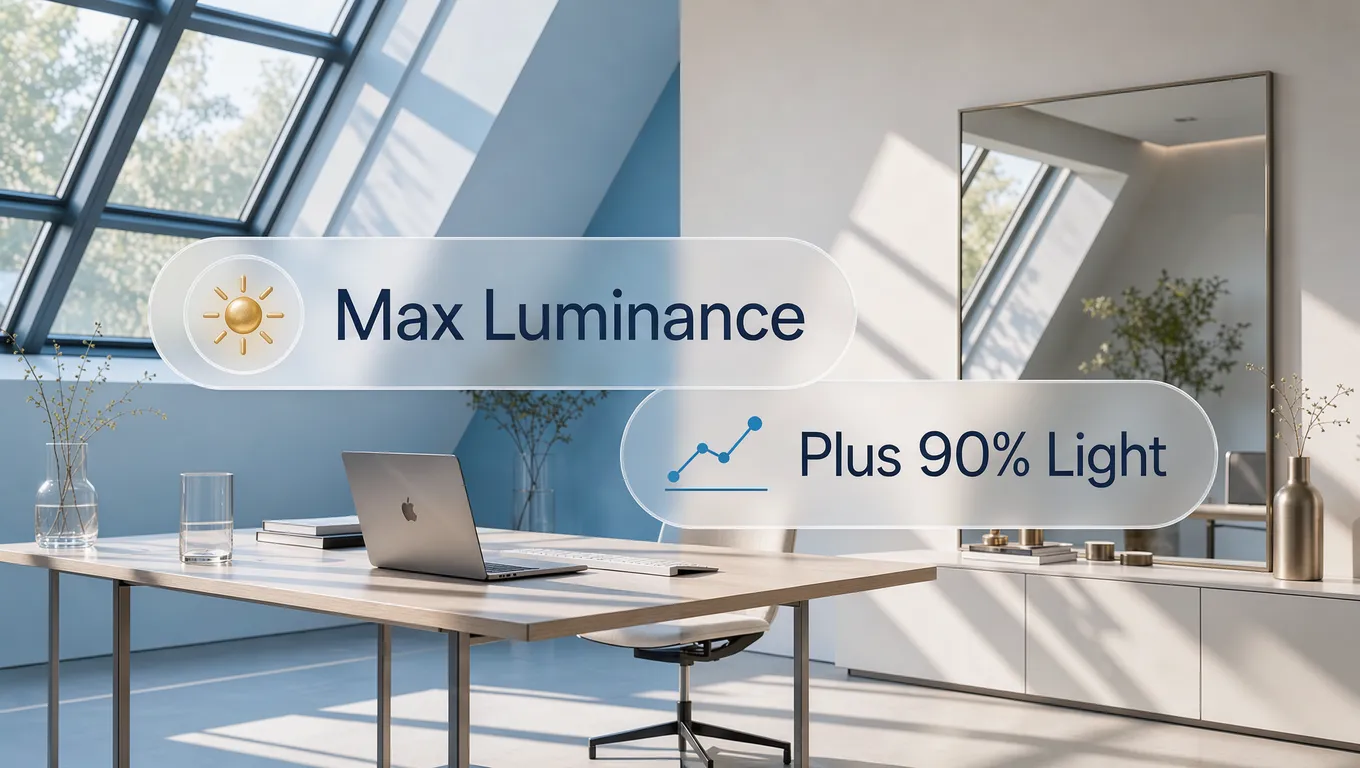
Follow this 3-step diagnostic to clear your light pathways:
- Clear the Window Sill Zone: Remove heavy paper stacks, large desktop organizers, and dense indoor plants resting on your window sills.
- Reposition Visual Wall Barriers: Shift tall 6-foot bookcases or credenzas away from the wall adjacent to your window to stop them from casting deep room shadows.
- Inspect Outdoor Overhangs and Foliage: Trim back low-hanging tree branches or exterior porch vines blocking sunlight before it hits your window glass.
3. Position Your Desk to Make Better Use of Window Light
Placing your desk directly facing a bright window blinds your vision with direct glare, while putting your back to a window casts your own shadow over your keyboard and creates terrible monitor reflections.
Optimizing your desk placement near window frames requires strategic spatial angling for ideal home office desk window placement.
  [ INCORRECT: Desk Facing Window ] ===> Blinding Direct Glare + High Contrast = Eye Strain
                                             |
  [ CORRECT:   Desk 90° Perpendicular] ===> Balanced Side Light + Zero Screen Glare = Total Comfort
Selection rules for desk placement:
- Position Desk at a 90-Degree Angle: Place your workstation perpendicular to your main window wall. Side lighting illuminates reading documents evenly without bouncing off screen glass.
- Set Back 2 to 3 Feet from Glass: Avoid jamming your desktop flush against the window glass. Retracting your desk 24 to 36 inches softens direct sun exposure and prevents midday thermal heat buildup.
- Align Hand Dominance to Daylight: Position right-handed writers with the window on their left side (and lefties with windows on their right) to eliminate annoying hand shadows across notebooks.
4. Choose Window Treatments That Let More Daylight Inside
Heavy dark curtains or cheap plastic mini-blinds force you into an all-or-nothing choice: either live in a dark cave or work in a fishbowl exposed to neighbor eyes.
Selecting high-performance curtains for natural light and modern blinds for home office windows lets you control privacy and illumination simultaneously.
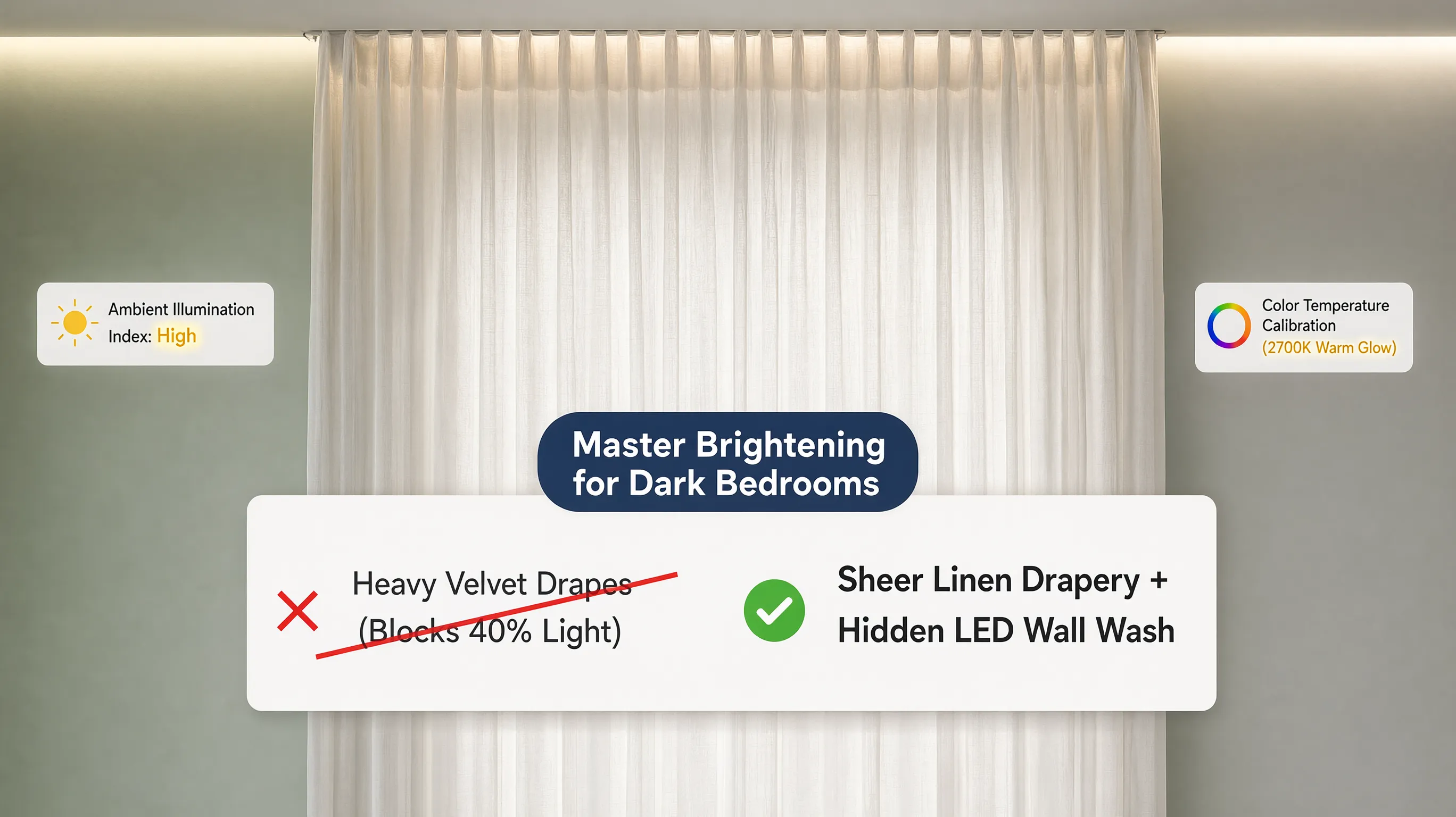
Selection guidelines for window coverings:
- Invest in Top-Down Bottom-Up Shades: Lower the top section of your blind to let natural ceiling daylight flood across your room while keeping the bottom section raised for total street-level privacy.
- Select 3% to 5% Openness Solar Fabrics: Choose solar roller shades that filter out harsh UV rays and heat without blocking your view or darkening your workspace.
- Mount Drapes High and Wide: Hang curtain rods 6 inches above the window frame and extend them 12 inches wider than the window trim on both sides. This lets you pull drapes completely off the glass frame when open.
If your workspace shares a bedroom footprint, see our bedroom workspace tactics for positioning desk gear away from sleep sightlines.
5. Use Mirrors to Spread Natural Light Around the Room
If your workspace features a single small window, the far side of your room often remains trapped in deep shadow.
Utilizing mirrors to increase natural light relies on strategic mirror placement for daylight to double incoming sun rays.
[ Window Wall ] ===> Incoming Daylight Beam ===> [ Opposite Wall Mirror ] ===> Bounces Daylight into Dark Corners
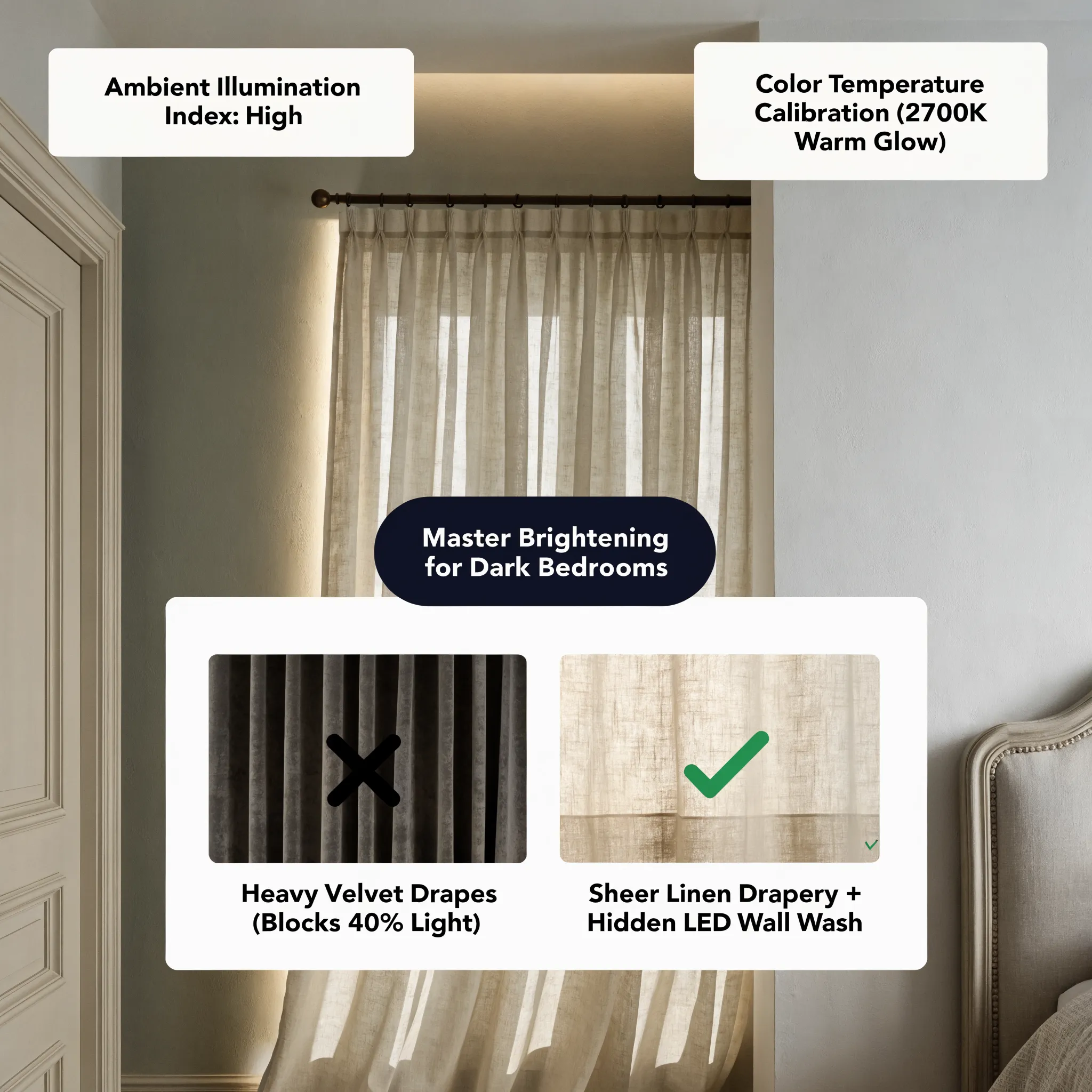
Mirror positioning tactics:
- Hang Mirrors Perpendicular to Windows: Place a large framed wall mirror on the wall adjacent or directly opposite to your main window. The mirror acts as a secondary window, reflecting sunlight into shadowy corners.
- Angle Mirrors Toward Dark Alcoves: Angle decorative wall mirrors slightly toward dark entryways or structural nooks to push reflected daylight deeper into your room's floor plan.
- Avoid Reflecting Desktop Clutter: Ensure your mirror reflects pleasant natural views, painted walls, or artwork rather than a chaotic pile of printer cables and loose paperwork.
For broader reflective surface tactics, see our mirror placement guide for doubling visual depth and light bounce.
6. Choose Light Wall Colors That Help Your Home Office Feel Brighter
Dark matte paint colors swallow daylight like a sponge, requiring high-wattage artificial bulbs to keep your space readable.
Selecting curated light paint colors for home office walls and exploring colors to brighten a dark office elevates your room's overall Light Reflectance Value (LRV).
Color selection guidelines:
- Check Paint LRV Ratings: Select interior paint colors with an LRV rating of 70% or higher. Higher LRV ratings mean the paint bounces light back into the room rather than absorbing it.
- Select Satin or Eggshell Finishes: Avoid flat matte paints in dark rooms. A subtle satin or eggshell finish provides a soft sheen that disperses natural light without creating harsh reflections.
- Warm Up North-Facing Rooms: If your window faces north, choose warm white or pale peach undertones to counteract cool, bluish daylight.
For specific shade recommendations, see our warm neutral palettes that reflect daylight and expand tight workspace walls. For grounding wall tone guidance, read our cozy shade families that create a calming focus backdrop.
7. Select Furniture and Finishes That Don't Absorb Too Much Light
Heavy dark walnut desks, bulky black leather armchairs, and dark filing cabinets make a small room feel visually heavy and dim.
Incorporating light furniture for home office setups and selecting reflective office furniture finishes keeps your space feeling open, airy, and bright.
- Dark leather armchair
- Swallows available floor light
- Clear acrylic or chrome-legged mesh chair
- Reflects ambient room light across deck
Furniture selection rules:
- Choose Natural Blonde Woods: Select furniture crafted from natural oak, ash, or light maple. Light wood surfaces reflect natural daylight across your work area.
- Incorporate Glass and Metal Accents: Choose desks with open metal leg frames or tempered glass desktop accents to let light pass uninterrupted through to the floorboards.
- Opt for Floating Wall Shelves: Replace heavy floor-to-ceiling bookcases with slender white or light wood floating wall shelves that leave continuous wall space exposed.
For matching furniture proportions to your floor plan, see our sizing guide for fitting furniture into tight traffic paths. For technical metrics on light reflectance, material durability, and environmental safety standards, consult the Sustainable Furnishings Council (SFC).
8. Keep Windows and Nearby Areas Clear to Let Daylight Travel Further
Even the best lighting layout fails if clutter slowly accumulates on window sills and nearby desktop surfaces.
Learning how to maximize natural light in office layouts requires establishing strict routines to keep home office windows clear.
Maintenance tactics:
- Keep Window Glass Spotless: Clean your window glass inside and out every month. Accumulated dust, rain spots, and pollen can block up to 20% of natural daylight transmission.
- Enforce Low-Profile Desktop Storage: Position low-profile drawer units beside your desk rather than stacking tall paper organizers directly in front of window frames.
- Trim Indoor Foliage: Keep indoor house plants neatly trimmed and positioned to the side of the window frame rather than directly in the light beam path.
For keeping workspace surfaces clear, see our cabinet storage approach for keeping workspace supplies organized and hidden.
9. Make a Home Office Brighter When Natural Light Is Limited
If your workspace is located in a windowless basement, a north-facing corner, or a tight shaded alcove, relying on direct sunlight alone isn't an option.
Knowing how to brighten a dark home office or design a home office with little natural light relies on simulating natural daylight spectrums.
  [ BASEMENT DAYLIGHT SIMULATION 1: Mount 4000K Full-Spectrum LED Ceiling Panels ]
                                      |
  [ BASEMENT DAYLIGHT SIMULATION 2: Hang Faux Window Frame with Soft Backlight  ]
                                      |
  [ BASEMENT DAYLIGHT SIMULATION 3: Add High-LRV White Paint & Mirrored Art     ]
Tactics for limited-light rooms:
- Install 4000K Full-Spectrum LEDs: Replace dull yellow light bulbs with full-spectrum LED fixtures rated between 3500K and 4000K (Natural Daylight). This color temperature mimics natural midday sun, keeping you alert and focused.
- Create a Backlit Faux Window: Install a framed wall mirror or frosted glass panel backlit with hidden LED strip lighting to simulate the soft, open feel of an exterior window.
- Use High-Gloss Light Artwork: Hang framed art prints with white mats and clear glass facing dark corners to create reflective highlights that catch ambient light.
For broader lighting design, read our per-zone dimmable lighting approach for compact rooms.
10. Control Sunlight and Screen Glare Without Darkening the Room
Harvesting natural daylight is wonderful, but blinding direct sunlight reflecting off your monitor screen forces you to squint, causing severe headaches.
Learning to reduce screen glare near window setups and managing home office sunlight glare preserves visual comfort throughout the day.
Glare control guidelines:
- Attach Matte Screen Protectors: Apply a anti-glare matte screen filter over glossy computer monitors to scatter direct light reflections without dimming your display brightness.
- Adjust Screen Tilt Angles: Mount your monitor on an adjustable gas-spring arm. Tilting the screen downward 5 to 10 degrees eliminates reflections from upper windows instantly.
- Use Micro-Perforated Solar Shades: Pull down micro-perforated solar shades during peak afternoon sun to cut glare while maintaining views and natural light flow.
For official technical specifications on workplace glare metrics, visual comfort standards, and lighting placement, consult the Illuminating Engineering Society (IES) and the Occupational Safety and Health Administration (OSHA).
11. Combine Natural Light With Artificial Lighting for Darker Hours
Natural daylight changes constantly throughout the day, fading during overcast weather and disappearing completely when evening arrives.
Building a flexible layout for home office lighting with natural light requires pairing daylight with a quality desk lamp for home office task performance.
  [ DAYLIGHT LAYER: Natural Window Light (Primary Daylight Hours) ]
                                |
  [ AMBIENT LAYER: Recessed 3000K Ceiling Dimmers (Cloudy / Evening) ]
                                |
  [ TASK LAYER:    Dimmable High-CRI LED Desk Lamp (Focused Night Work) ]
Lighting integration rules:
- Layer Three Distinct Light Sources: Combine natural daylight with indirect ambient ceiling lights and a dedicated, adjustable LED task lamp on your desk.
- Install Dimmable Smart Controls: Connect artificial lighting fixtures to smart dimmer switches. As natural daylight fades in the late afternoon, smoothly dial up artificial task lighting to maintain steady room brightness.
- Match Artificial Color Temperatures: Use 3000K to 4000K LED bulbs for task lamps so artificial light blends seamlessly with natural daylight without creating awkward yellow-and-blue color casts.
For video call lighting setups that pair with natural daylight, see our studio lighting guide for professional on-camera presence.
12. Plan a Home Office Layout That Makes the Most of Daylight
Ready to transform your dark, gloomy workspace into a sun-drenched, high-performance sanctuary that fuels your energy and focus every single day?
Before buying paint, ordering blinds, or rearranging heavy furniture, bring all your window locations, desk angles, mirror placements, and lighting layers together into a clear home office natural light design and natural light office layout. To preview everything before committing, read our digital preview workflow for testing daylight layouts before buying furniture.
  [ Step 1: Audit Window Angles & Orient Desk 90° Perpendicular to Light ]
                                 |
  [ Step 2: Clear Window Sill Clutter & Mount Top-Down Solar Shades ]
                                 |
  [ Step 3: Apply 70%+ LRV Satin Wall Paint & Position Light Wood Desks ]
                                 |
  [ Step 4: Mount Perpendicular Wall Mirrors & Layer 4000K Task LEDs ]
                                 |
  [ Step 5: Execute Natural Light Office Plan with Total Confidence ]
The Ultimate Natural Light Home Office Sign-Off Checklist:
- [ ] Validate Desk Orientation: Confirm workstation sits 90 degrees perpendicular to main window walls.
- [ ] Clear Light Paths: Ensure no tall bookcases or heavy cabinets block daylight between windows and your desk.
- [ ] Upgrade Window Coverings: Install light-filtering solar shades or top-down bottom-up blinds.
- [ ] Increase Wall Reflectance: Apply high-LRV (70%+) satin paint to bounce daylight into dark corners.
- [ ] Position Reflective Mirrors: Mount wall mirrors perpendicular to windows to double natural light distribution.
- [ ] Eliminate Screen Glare: Tilt monitors downward and use anti-glare screen filters to protect your eyes.
Step Into Your Sun-Drenched Workspace Sanctuary Today
You deserve a workspace that energizes your mind, protects your vision, and elevates your daily performance with natural, invigorating daylight. Transforming a dark home office into a bright, welcoming sanctuary doesn't require structural demolition or endless trial-and-error.
By focusing on 90-degree desk positioning, light-reflective wall colors, high-performance solar shades, and strategic mirror placements, you can eliminate dark frustration and build a sun-filled retreat tailored to your exact lifestyle.
How can DesignHome help you design the ultimate sun-drenched workspace layout for your home today?
Frequently Asked Questions About Improving Natural Light in a Home Office
My workspace feels like a dim subterranean cave by 11:00 AM. How do I actually get more sunlight into my room?
Here is the blunt reality: you don't need to knock down structural walls to illuminate a dark room—you just need to eliminate visual blockages and harvest available daylight. When your workspace relies solely on a single overhead bulb, your eyes strain continuously to read glowing screens against dark surroundings. Orienting your desk deck at a 90-degree angle to windows while clearing away bulky furniture barriers creates an unbroken sunlight corridor. This strategic spatial arrangement allows you to improve natural light in a home office, turning a gloomy room into a vibrant, high-output sanctuary that fuels your daily focus.
I have a window right next to my desk, but the blinding screen glare is giving me severe headaches. What am I doing wrong?
Placing your computer monitor directly facing a bright window forces your eyes into a constant, exhausting tug-of-war with direct sun rays. The fix is shifting your desk layout: Position your desk perpendicular to the window so daylight washes sideways across your typing deck. Attach a anti-glare matte screen filter over glossy monitor glass to scatter direct reflections. Install light-filtering solar roller shades that cut out 97% of harsh UV heat while preserving your outside view.
Will hanging dark curtains make my small home office feel even smaller and darker?
Absolutely. Heavy, dark velour drapes swallow up to 70% of natural window light, trapping your space in permanent shadow and creating heavy visual noise. Replacing thick drapery with sheer linen curtains or top-down bottom-up shades allows soft daylight to flood your upper ceiling while keeping lower street-level privacy intact. Hanging curtain rods 6 inches above your window frame lets you pull fabrics completely clear of the glass, instantly expanding your room's visual footprint for a sun-drenched natural light home office.
Can placing a mirror in a dark home office really double the daylight coming from a single window?
Yes—provided you position the mirror to bounce photons into shadowy corners rather than reflecting visual mess. Hanging a large, framed wall mirror directly opposite or perpendicular to your primary window acts as a secondary architectural window. The glass surface catches incoming sunlight and redirects it deep into dark room recesses, effectively doubling your illumination without adding a single cent to your monthly electric bill.
What paint color should I pick to brighten up a gloomy, shaded home office?
If you want to brighten a dark home office, stay far away from heavy matte dark paint shades that absorb light like a sponge. Look for interior paint colors with a Light Reflectance Value (LRV) rating of 70% or higher, such as warm alabaster white, pale sage, or soft cream. Choosing satin or eggshell paint sheens over flat matte finishes gives your walls a subtle surface sheen that disperses incoming daylight evenly across your entire floor plan.
My dark walnut desk makes my entire workspace feel visually heavy. Should I replace it?
Heavy black executive desks and dark leather chairs absorb ambient light, making compact rooms feel dim and claustrophobic. Swapping out bulky dark furniture for light natural oak, pale ash, or clean white lacquered decks instantly brightens your workspace. Choosing desks with open metal legs or tempered glass details lets daylight pass uninterrupted straight through to your floorboards, creating an airy, weightless aesthetic.
What can I do if my home office is in a windowless basement or a north-facing room with almost no sunlight?
When working in a home office with little natural light, relying on direct sunshine alone isn't an option: Install 4000K Full-Spectrum LEDs: Swap out dull yellow bulbs for full-spectrum ceiling fixtures that mimic natural midday sun to maintain alertness. Add Backlit Faux Windows: Mount a framed frosted glass panel illuminated by hidden rear LED strips to simulate an open window frame. Use High-LRV Wall Art: Hang framed prints with wide white mats and clear glass to catch and scatter ambient room light.
How do I stop clutter on my window sill from cutting off my daily sunlight?
Window sill clutter is a silent daylight killer. When notebooks, printer paper stacks, and dense potted plants pile up against window glass, they block incoming sun rays before light ever hits your desk deck. Enforce a strict 100% clear window zone. Shift tall storage organizers below the lower sill line and move bushy indoor plants 12 inches to the side of the window frame so daylight travels freely across your entire room.
How do I keep my home office bright and readable once the sun sets in the late afternoon?
Relying on a single daylight source leaves you stranded in the dark the moment clouds roll over or evening approaches. Build a layered lighting system that adapts effortlessly: Connect artificial ceiling lights to smart dimmer switches so you can smoothly balance fading afternoon daylight. Use an adjustable LED task lamp equipped with a 3000K–4000K high-CRI (90+) bulb directly over your active reading materials. Stick low-profile LED light bars beneath floating wall shelves to flood your desk deck in uniform, shadow-free illumination.
Why do my eyes feel constantly strained even though my room has plenty of bright sunlight?
High contrast is the hidden culprit behind daily eye strain. When bright daylight streams through your window while the wall behind your monitor remains in deep shadow, your pupils micro-adjust thousands of times an hour. Mounting a soft 2700K LED bias light strip behind your computer monitor illuminates the wall space behind your screen. Equalizing the brightness between your display and the backdrop eliminates intense visual contrast, keeping your eyes relaxed through long focus blocks.
How do I choose window shades that protect my privacy on ground-floor offices without turning my room pitch-black?
Traditional mini-blinds force an all-or-nothing trap: either open your space to passersby or live in complete darkness. Opt for top-down bottom-up cellular shades. This versatile window hardware allows you to lower the top section of the shade to harvest clear overhead sky light while keeping the bottom section raised to shield your desk deck from street-level sightlines.
How do I test different light-harvesting layouts and desk angles before moving heavy furniture around?
Stop guessing window clearance angles, wrestling with heavy wooden desks, and worrying if new paint shades will bounce enough light. You can test your exact daylight pathways, desk positions, and wall reflectance virtually before shifting a single piece of furniture. With DesignHome Synthesis AI, you can instantly stream your room dimensions into an interactive canvas, test custom 90-degree desk arrangements against window frames, preview light-reflective wall finishes, and visualize your complete natural light office layout to craft a sun-drenched sanctuary you will love working in every day.


