

You walk into your living room at 5:30 PM and find your child sprawled across the floorboards, trying to write an essay on a clipboard while balancing a heavy library book on the sofa cushion.
Or perhaps your kitchen counter has been completely taken hostage—buried under an avalanche of colored pencils, glue sticks, open workbooks, and a charging school tablet right where you need to prep dinner. Every single evening brings the exact same exhausting routine: clearing away homework chaos to set out plates, only to watch your child lose focus, wander off toward the television, and fight you on finishing their assignments. You lean against the doorway, look at the cramped room, and ask yourself: How can I build a dedicated homework spot when we don't even have a spare closet, let alone an extra room?
Here is the liberating reality of smart residential planning: mastering homework space ideas for small homes isn't about having dedicated square footage—it is about carving out high-performance micro-zones using underutilized wall space and clever compact furniture.
Study areas fall apart in small homes when heavy furniture blocks walking paths, when school supplies sprawl across shared family surfaces, and when visual noise destroys your child's concentration. By locating overlooked room corners, mounting floating wall desks, utilizing mobile supply caddies, and managing task lighting, you can build a sun-drenched, distraction-free study corner that empowers academic growth without crowding your living space. For a deeper approach to carving work zones inside shared living areas, see our zoning tactics for blending a workstation into a lounge footprint.
Whether you are configuring a narrow hallway alcove or transforming a shared bedroom corner, here is how to plan, zone, and execute a space-saving homework hub step by step.
1. Homework Space Ideas for Small Homes That Make Room to Study
Before buying a children's desk or rearranging your living room, step back and examine how your home's floor plan currently handles after-school routines.
Most homework setups fail in compact floor plans because parents assume study zones require an entire spare room, leading to temporary setups on beds or dining tables that constantly disrupt family life.
Lost Pencils
TV Distractions
= Daily Fights
Vertical Pegboard
Task Lighting
= Self-Driven Focus
To execute high-impact homework space ideas for small homes and establish a functional small home homework area, anchor your plan around three core rules:
- Reclaim Dead Floor Space: Build upward along empty walls rather than footprint-heavy desks that swallow floorboards.
- Establish Point-of-Use Storage: Keep everyday school supplies contained in dedicated wall racks or portable bins so clear surfaces stay clear.
- Decouple Study from Household Foot Traffic: Angle the workspace away from main doorways and television sightlines to protect mental focus.
Explore our architectural layout strategies for concealed home office ideas to learn how spatial proportion principles transform compact multi-use spaces.
2. Find Unused Corners That Can Become Homework Stations
Take a walk through your home with fresh eyes. Almost every small house features hidden architectural nooks that are completely overlooked during daily routines.
Discovering creative homework station ideas, building a small homework corner, or mapping out study corner ideas starts by auditing dead architectural real estate.
Follow this 3-step diagnostic to locate your home's hidden study zone:
- Measure Recessed Wall Nooks: Look for structural recesses behind doors or beside fireplaces that measure at least 24 to 30 inches wide.
- Audit Living Room End Walls: Identify dead wall space beside media consoles where a narrow desk frame can tuck neatly without blocking walkways.
- Check Daylight Angles: Select a nook near a window or an accessible wall outlet to ensure easy lighting and tablet charging.
3. Turn an Empty Wall Into a Compact Homework Area
When floor space is completely maxed out, your drywalls become your most valuable spatial asset.
Installing a wall-mounted homework desk or mounting a floating desk for small spaces pulls the entire workstation off the floorboards, making tight rooms feel significantly larger.
- Traps dust & cuts off floorboard
- Restricts chair movement
- Continuous floorboards exposed underneath
- Effortless chair tuck-in & easy cleaning
Vertical mounting rules:
- Anchor Directly to Timber Studs: Secure heavy floating desks directly into structural wall studs using heavy-duty lag bolts to ensure the work surface holds heavy textbooks safely.
- Set Height to Match Child's Frame: Mount the writing surface 22 to 26 inches off the floorboards for elementary students, or 28 to 30 inches for teenagers.
- Incorporate Upper Storage Run: Mount a matching floating shelf 18 inches above the desktop deck to store reference books and pencil cups vertically.
Craft Your Dream Homework Sanctuary in Minutes
Upload a floor plan of your existing room or generate a fresh, customized concept using DesignHome™ Synthesis AI floorplan maker to test compact desk placements, experiment with floating shelf heights, check walking clearance aisles, and visualize your complete lively homework sanctuary in rich 3D before buying a single piece of furniture.
4. Use a Fold-Down Desk That Disappears After Homework
In compact homes where every square foot must perform double duty, a permanent desk can feel like an obstructive obstacle during non-study hours.
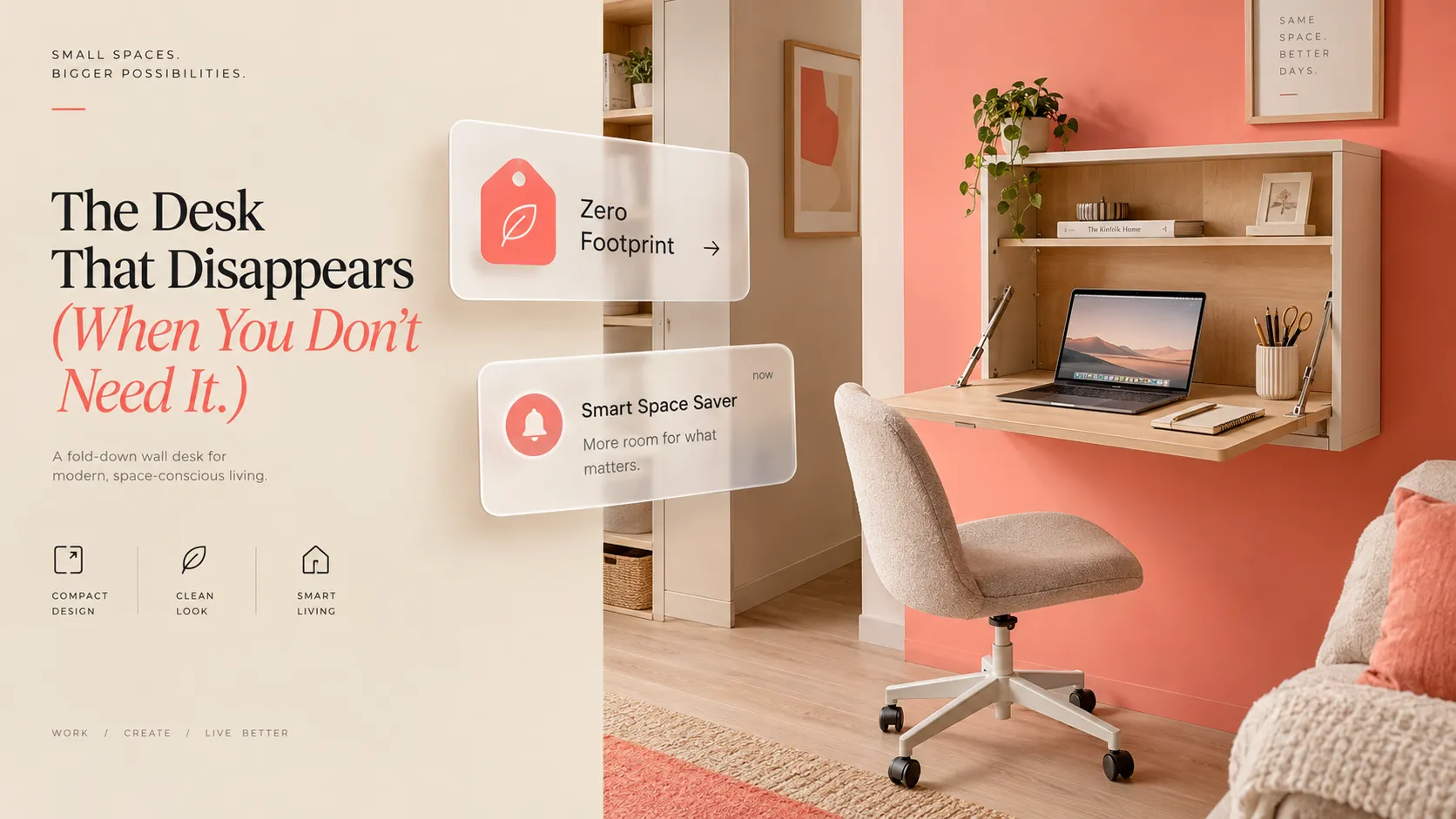
Integrating a fold-down homework desk or utilizing a folding desk for small spaces provides a full-sized writing surface that vanishes in seconds.
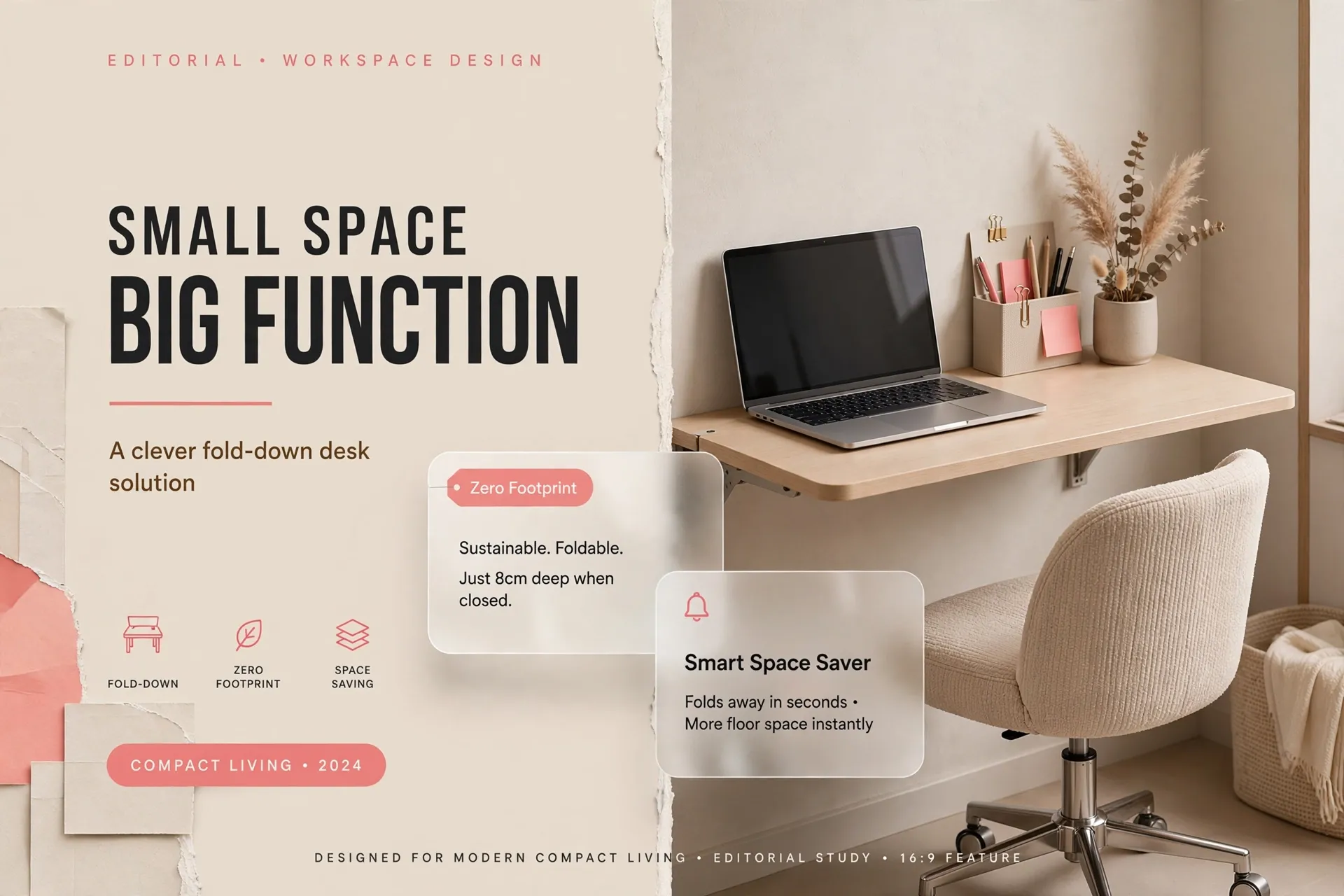
Selection tactics for fold-down furniture:
- Choose Gas-Strut Hinges: Select wall cabinets fitted with soft-close gas struts to prevent the desk deck from slamming down on small fingers.
- Verify Interior Shelf Depths: Ensure the internal cabinet bays are deep enough to store chargers, notebooks, and pencil cases while closed.
- Pair with Nesting Stools: Choose a compact stool or folding chair that slides neatly into an adjacent closet when homework time ends.
5. Fit a Homework Station Into a Bedroom Without Crowding It
Placing a study area inside a child's bedroom gives them quiet privacy, but dropping a bulky desk beside a bed can leave zero room for play or dressing.
Positioning a small bedroom homework station and selecting an efficient bedroom homework desk relies on smart furniture scaling and sightline control. For compact bedroom layout strategies, see our furniture placement rules for fitting workstations into tight sleeping footprints.
  [ BEDROOM PLACEMENT 1: Replace traditional nightstand with a 24" shallow console desk ]
                                      |
  [ BEDROOM PLACEMENT 2: Float a compact desk along the window wall perpendicular to glass ]
                                      |
  [ BEDROOM PLACEMENT 3: Utilize an open alcove beside the wardrobe frame ]
Bedroom setup rules:
- Replace Nightstands with Desks: Swap out a single-purpose bedside table for a 24-inch deep writing desk. The surface serves as a nightstand lamp holder by night and a study space by day.
- Keep Desktop Surfaces Clear of Bed Sightlines: Position the desk so computer screens and assignment books sit outside direct eye contact from the pillow, protecting relaxing bedtime atmospheres.
- Choose Mid-Back Residential Chairs: Select low-profile residential desk chairs that slide completely beneath the desktop deck to keep walking aisles open.
For multi-function room zoning, see our multi-function layout playbook for rooms pulling double duty. For soft divider tactics, read our folding screen and area rug playbook for defining zones without walls.
6. Create a Homework Area in a Living Room or Shared Family Space
When bedrooms are shared among siblings, the living room often becomes the only viable location for evening homework supervision.
Building a living room homework station and organizing a shared family study area requires blending work furniture seamlessly into your primary living room aesthetic.
Living room integration guidelines:
- Float Desks Behind Sofas: Position a slender console desk directly against the back of your central sofa. This uses underutilized floor space while shielding study supplies from main room entryways.
- Harmonize Finishes: Select desk woods, brass hardware, and seating fabrics that mirror your living room credenza and side tables.
- Enforce End-of-Day Clearances: Require all school supplies to be packed away inside decorative storage baskets at 5:00 PM to restore your lounge sanctuary.
7. Choose Small Desks and Chairs That Fit the Available Space
Buying oversized corporate furniture for a small home creates immediate spatial bottlenecks, forcing family members to squeeze past desk corners.
Selecting a compact homework desk, a small study table for kids, or a space-saving desk ensures comfortable ergonomics without swallowing your floor plan. For matching furniture proportions to your floor plan, see our sizing guide for fitting furniture into tight traffic paths.
- Blocks 36" primary walkway
- Dominates room visually
- Preserves 36" clear circulation path
- Blends seamlessly into wall architecture
Furniture proportion guidelines:
- Target 20-to-24-Inch Desk Depths: Avoid 30-inch deep desks. A 20-to-24-inch deep surface provides ample room for open textbooks and laptops while saving precious walking clearance.
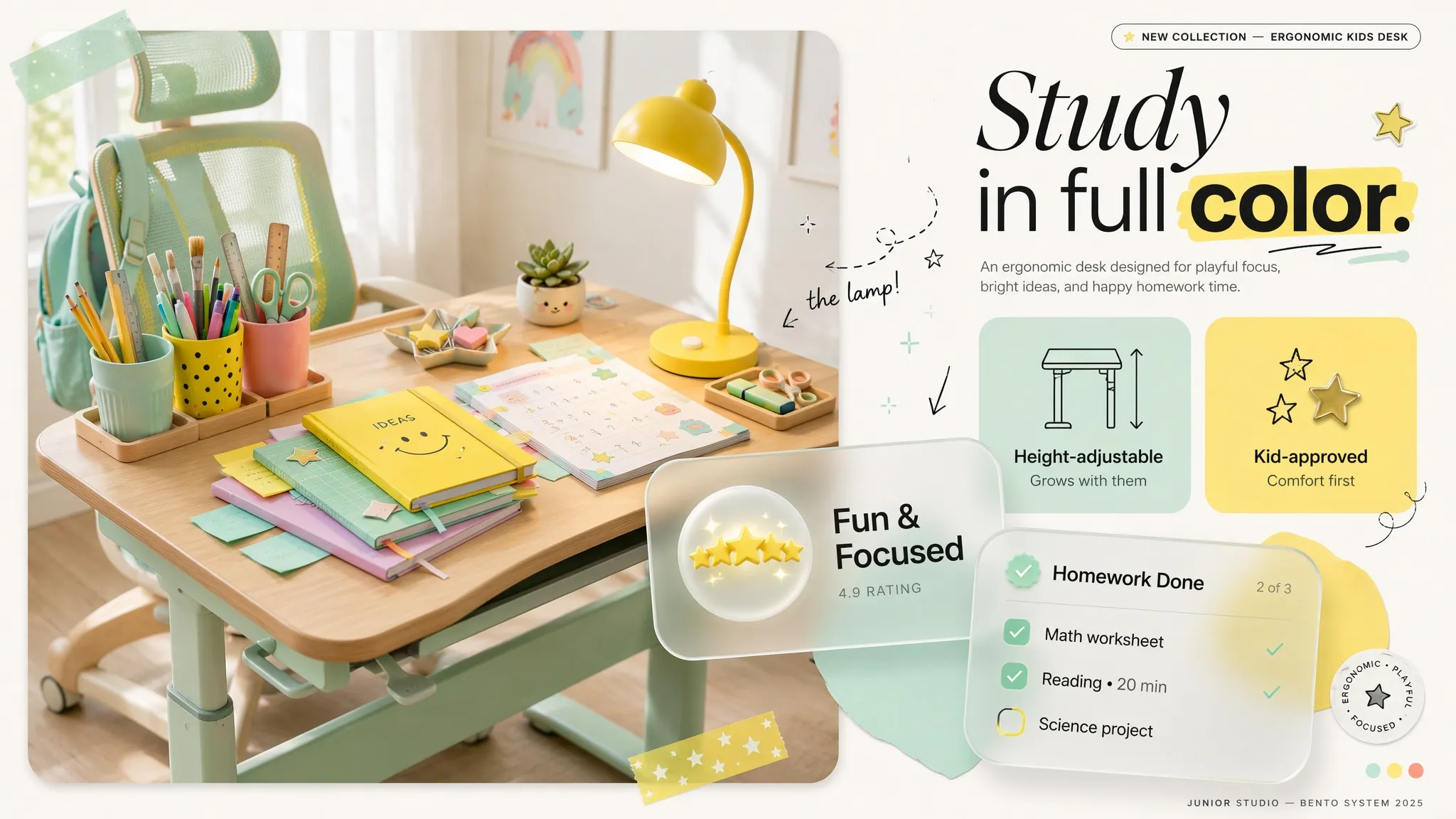
- Incorporate Adjustable Chairs with Footrests: Ensure chairs feature height adjustments and footrest rings so young children sit with elbows at 90 degrees and feet firmly supported.
- Select Rounded Edge Profiles: Choose desk frames crafted with smooth, bullnose edges or rounded corners to protect active kids in tight quarters.
For technical specifications on child safety standards, non-toxic finish formulations, and ergonomic guidelines, visit the Sustainable Furnishings Council (SFC).
8. Use Vertical Storage to Keep Books and School Supplies Off the Desk
When working with a compact 32-inch desktop deck, leaving notebooks, rulers, and pencil cups on the flat surface leaves zero room to actually write.
Implementing vertical storage for homework station layouts and gathering smart small desk storage ideas keeps your work surface 100% clear.
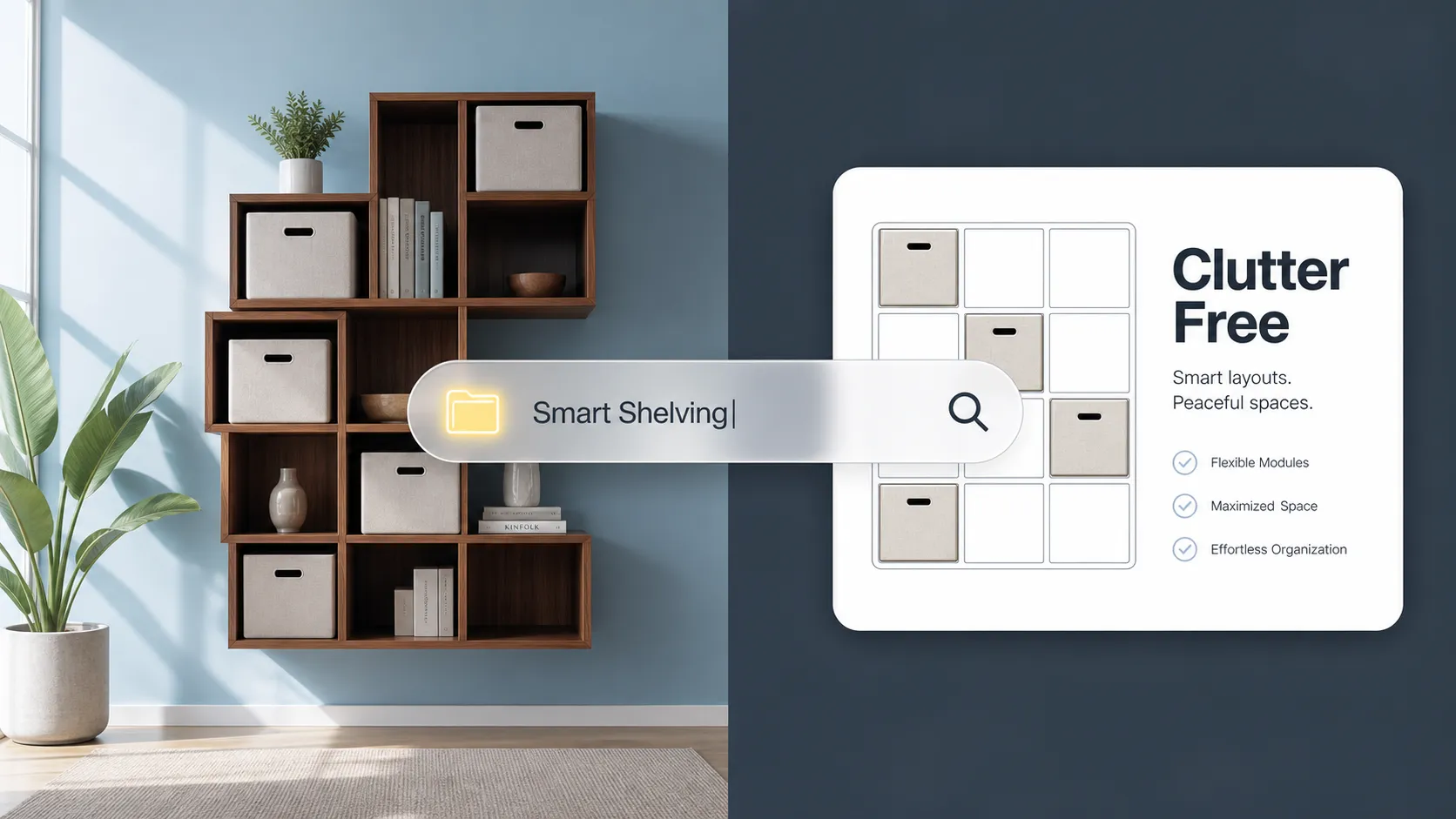
Vertical storage tactics:
- Mount a Metal Pegboard System: Install a 24x18-inch pegboard directly above the desk deck. Hang modular wire baskets and pencil cups to lift small tools off flat surfaces.
- Use Tiered Magazine Holders: Mount vertical wire or wooden magazine file holders to the wall to store active assignment folders by subject (e.g., Blue for Math, Red for Science).
- Add Under-Shelf LED Strip Lighting: Stick a low-profile LED light strip to the underside of your lowest floating shelf to flood the writing surface in shadow-free light.
For point-of-use storage principles, see our cabinet storage approach for keeping workspace supplies organized and hidden. For broader vertical wall tactics, read our vertical wall strategies that lift storage off floorboards.
9. Keep Homework Supplies Organized in Drawers and Portable Caddies
Searching for an eraser, hunting down a ruler, or sharpening pencils burns up valuable time and breaks your child's concentration before they even start reading.
Mastering homework station organization and implementing smart kids school supply storage makes daily setup and cleanup completely effortless.
  [ SUPPLY ORGANIZER 1: Portable 3-Tier Rolling Utility Cart with Locking Wheels ]
                                      |
  [ SUPPLY ORGANIZER 2: Divided Acrylic Desktop Caddy with Grab-and-Go Handle   ]
                                      |
  [ SUPPLY ORGANIZER 3: Modular Drawer Inserts for Shallow Desk Drawers         ]
Organization guidelines:
- Use Mobile Utility Carts: Place a 3-tiered metal rolling cart beside the desk frame. Store art supplies on top, notebooks in the middle, and tablets on the bottom, rolling the entire cart into a closet after study hours.
- Assemble Grab-and-Go Supply Caddies: Keep daily essentials (pens, erasers, highlighters, glue) inside a portable caddy with a center handle so your child can carry their kit anywhere.
- Label All Bins and Drawers: Use a digital label maker or chalk tags on storage bins so young children know exactly where items belong when cleaning up.
For guidance on residential safety standards, electrical code access, and building regulations, consult the International Code Council (ICC) and the Illuminating Engineering Society (IES).
10. Make a Small Homework Area Comfortable With the Right Lighting
Tucking a study desk into an unlit corner or under a staircase leaves your child working in their own shadow, causing rapid eye fatigue, squinting, and headaches.
Upgrading homework desk lighting and selecting tailored lighting for small study spaces ensures optimal visual comfort without cluttering compact surfaces. For dim rooms that need supplemental light, see our lighting fixes for dark rooms with limited natural light. For a deeper framework on layered fixture placement, read our per-zone dimmable lighting approach for compact rooms.
Lighting execution rules:
- Select High-CRI LED Bulbs: Choose task lamps with a High Color Rendering Index (CRI 90+) and neutral 3000K to 4000K bulb temperatures to keep reading text crisp and comfortable.
- Position Lamp Opposite Writing Hand: Place the task light on the left side of right-handed children (and right side for lefties) to eliminate hand shadows across writing pages.
- Clamp Lights to Save Surface Space: Choose a heavy-duty clip-on LED lamp that clamps onto an upper floating shelf edge, leaving 100% of the desktop deck open for books.
11. Separate Homework From Play and Household Distractions
When a homework area is situated inside a busy living room or a toy-filled bedroom, television noise and nearby gadgets constantly pull your child's focus away from their work.
Building a homework area in shared room environments and creating a small distraction-free study area relies on establishing clear visual and auditory boundaries.
- Phones charging on desktop deck
- Toys visible in direct sightline
- Dedicated "Tech Dock" in hallway
- High-backed chair & study headphones
Distraction control rules:
- Orient Desk Facing a Wall: Position the desk so your child faces a clean wall or pinboard while sitting, shielding their sightlines from surrounding room activity.
- Establish a Digital Docking Station: Set up a charging station outside the immediate study nook where personal phones and gaming devices remain during focus blocks.
- Use Folding Privacy Trays: Provide a lightweight 3-panel tabletop privacy board that sets up in seconds, blocking side visual distractions in shared family rooms.
12. Plan a Small Homework Station That Fits Your Home and Daily Routine
Ready to build an organized, space-saving study nook that turns homework time from a daily battle into a smooth, stress-free routine?
Before buying compact furniture, drilling wall anchors, or ordering storage caddies, bring all your room dimensions, electrical outlets, vertical wall surfaces, and storage needs together into a cohesive small home homework station layout and homework space planning strategy. To preview everything before committing, read our digital preview workflow for testing study layouts before buying furniture.
  [ Step 1: Audit Unused Room Corners & Measure 24"-30" Wall Recesses ]
                                 |
  [ Step 2: Mount Heavy-Duty Floating Wall Desk & Position Adjustable Ergonomic Chair ]
                                 |
  [ Step 3: Layer Vertical Pegboards, Floating Shelves & Under-Shelf LED Task Bars ]
                                 |
  [ Step 4: Systematize Mobile Rolling Supply Caddies & Color-Coded Subject Bins ]
                                 |
  [ Step 5: Execute Small Home Homework Space with Total Confidence ]
The Ultimate Small-Home Homework Station Sign-Off Checklist:
- [ ] Validate Wall Anchoring: Confirm floating desks and heavy wall shelves are lag-bolted directly into structural studs.
- [ ] Ensure Footprint Clearances: Verify a minimum 30-to-36-inch walking aisle remains open behind the desk chair.
- [ ] Incorporate High-CRI Task LEDs: Install glare-free 3000K–4000K task lighting positioned opposite your child's writing hand.
- [ ] Maximize Vertical Wall Real Estate: Mount pegboards and floating shelves to keep desktop surfaces 100% clear.
- [ ] Eliminate Sightline Distractions: Orient the workstation facing a wall, away from televisions and main room walkways.
- [ ] Systematize Point-of-Use Storage: Provide portable supply caddies and labeled bins for effortless 3-second cleanups.
Step Into Your Sun-Drenched Homework Sanctuary Today
You deserve a home that supports your child's education, elevates daily family harmony, and maintains clean, beautiful interior style without feeling crowded. Building a space-saving homework sanctuary doesn't require architectural demolition, extra square footage, or expensive room additions.
By focusing on vertical wall desks, fold-down workstations, mobile supply organization, and targeted task lighting, you can eliminate evening homework battles and create a lively, comfortable study spot that you will love living in for years to come.
What specific spatial challenges are currently holding you back in your home? How can DesignHome help you visualize, craft, and refine the ultimate small-home homework layout for your family today?
External Resources & Industry Standards
To explore deeper technical guidance on residential space planning, child ergonomics, and lighting metrics, consult these authoritative industry resources:
- Occupational Safety and Health Administration (OSHA) – Official computer workstation ergonomic guidelines, joint alignment, and seating metrics.
- Illuminating Engineering Society (IES) – Technical lighting standards, task illumination metrics, and glare prevention guidelines.
- International Code Council (ICC) – Residential building codes, wall-anchoring safety regulations, and building standards.
- Sustainable Furnishings Council (SFC) – Guidelines for non-toxic finishes, low-VOC paint formulations, and eco-friendly furniture millwork.
Frequently Asked Questions About Homework Space Ideas for Small Homes
How can I build a dedicated homework area when our home doesn't even have an extra closet to spare?
Building a high-performance homework setup doesn't require extra square footage—it relies on reclaiming underutilized vertical wall space. When floorboards are maxed out, mounting a slender floating desk or installing a fold-down wall cabinet instantly transforms a dead wall nook into a functional study hub. This approach keeps your walkways completely open while giving your child a dedicated workspace that feels personal and permanent.
How do I keep my child's school supplies from completely cluttering our dining table every evening?
Dining table clutter happens when daily tools lack an immediate, accessible landing spot. When putting away a pencil or notebook requires walking across the room to a deep cabinet, supplies naturally get dumped on flat family surfaces. Installing a vertical metal pegboard directly above a compact desk—paired with a mobile 3-tiered rolling utility cart—gives every folder, eraser, and textbook a 3-second point-of-use home, making daily cleanup completely effortless.
Will putting a study desk in my child's small bedroom make the room feel cramped and overcrowded?
Not when you match the furniture scale to your room's natural proportions. Bulky corporate desks with heavy wooden legs swallow floorboards and create severe visual clutter. Choosing a slender 20-to-24-inch deep floating desk or replacing a single-purpose bedside nightstand with a shallow writing table preserves vital floor space while maintaining full ergonomic comfort and open sightlines across the bedroom.
What is the absolute best position for a homework desk inside a busy, shared living room?
The ideal placement balances parental supervision with visual boundary control. Floating a compact console desk directly behind your main living room sofa transforms underutilized floor space into a dedicated workstation while keeping school supplies hidden from primary entryways. Angling the desk so your child faces away from television screens and high-traffic walkways protects their concentration during focus hours.
How can a fold-down desk support heavy textbooks and laptops without pulling out of the drywall?
Rock-solid stability relies on proper structural anchoring. Heavy-duty wall-mounted fold-down desks fitted with soft-close gas struts are anchored directly into structural timber wall studs using heavy lag bolts. This structural support allows the desk deck to hold full monitor setups, laptop docks, and heavy binders safely, extending outward during study hours and folding flat against the wall the moment homework is finished.
How do I stop my child from getting constantly distracted when studying in a shared family room?
Controlling environmental distractions requires establishing clear visual and spatial boundaries. Orienting the desk to face a clean wall rather than open room activity shields your child's direct sightlines. Setting up a dedicated "Tech Docking Station" outside the immediate study nook keeps personal phones out of reach, while using a lightweight 3-panel privacy board blocks peripheral visual noise during homework sessions.
What type of desk lamp provides proper light for a small desk without taking up valuable workspace?
When working on a compact 24-to-30-inch desktop deck, traditional lamp bases steal critical writing space. Opt for a slim clip-on LED task lamp that clamps directly onto an upper floating shelf edge, or mount an under-shelf LED strip bar. Choose high-CRI (90+) bulbs with neutral 3000K to 4000K daylight color temperatures, positioning the light source opposite your child's writing hand to eliminate shadows across their pages.
How can two siblings share one compact study corner without arguing over space?
Managing a shared study zone relies on establishing strict individual territories. Instead of seating children side-by-side on an open desktop without boundaries, place a central vertical drawer unit or shelf divider in the middle of the workspace. Assigning individual task lights, color-coded subject storage bins, and separate drawer bays gives each child their own distinct focus bubble.
How do I choose a desk height and chair setup that supports good posture as my child grows?
Target a setup where your child's forearms rest flat on the desktop deck at a relaxed 90-degree elbow angle without hunching their shoulders. Their chair height should allow their feet to rest flat on the floorboards or an adjustable footrest ring with knees bent at 90 degrees. Investing in height-adjustable kids' study furniture allows you to raise the workspace deck in steady increments over time.
How can I prevent my living room from looking like an elementary school classroom when adding a desk?
Harmonize your study furniture materials with your existing interior decor. Select desk hardwoods, metal hardware, and chair fabrics that share the exact wood stains, paint shades, and finishes as your surrounding credenzas or coffee tables. Using matching woven storage baskets or closed cabinet bays keeps bright school folders and art supplies hidden when work is over.
How do I organize messy charging cables, tablet cords, and power bricks in a small study space?
Taming cable clutter relies on under-desk management hardware. Screw a metal J-channel cable raceway and a multi-outlet surge protector directly to the underside of the desktop deck. Drilling neat 2-inch grommet holes through the rear corners of the desk surface routes tablet and lamp cords straight down into concealed trays, keeping your sightlines clean and floorboards free of cord bundles.
How can I test different small homework space layouts before buying furniture or drilling into my walls?
Eliminate spatial guesswork by testing your exact furniture footprints, chair swivel clearances, and wall stud locations virtually before making a single purchase or drilling a single hole. Verifying your spatial clearances and walking aisles in advance guarantees every piece fits your home with total precision.


